⚡ Key Takeaways
- ✅ The cheapest healthy family meals usually start with beans, lentils, eggs, oats, rice, pasta, potatoes, frozen vegetables, and seasonal produce.
- ✅ A nutritious dinner for four can often be cooked for about $6 to $12, depending on local prices and what is already in your pantry.
- ✅ Meat does not need to disappear, but it works best as a flavoring or occasional centerpiece rather than the main event.
- ✅ Frozen and canned foods are not nutritional compromises; they are often budget heroes when chosen wisely.
- ✅ The best cheap meals are flexible formulas, not rigid recipes: grain plus protein plus vegetables plus sauce.
- ✅ Batch cooking one or two staples each week can prevent the expensive “what’s for dinner?” panic.
- ✅ Healthy budget cooking is less about culinary perfection and more about repeatable, satisfying meals people will actually eat.
There is a certain theatrical cruelty in asking parents to cook “healthy meals on a budget,” as if supper were a moral exam administered at 6:07 p.m. while someone is missing a shin guard and another person has decided that carrots are now “too orange.” Yet the question matters: what are the cheapest healthy meals to cook for a family of four? 🍲
The answer is both simpler and more interesting than the usual advice to “just meal prep,” which often sounds as though dinner should be managed like an airport logistics hub. The cheapest healthy meals are not fussy. They are built from humble foods that humans have relied on for centuries: legumes, grains, roots, eggs, cabbage, onions, canned tomatoes, yogurt, oats, and whatever fruit or vegetable happens to be affordable this week.
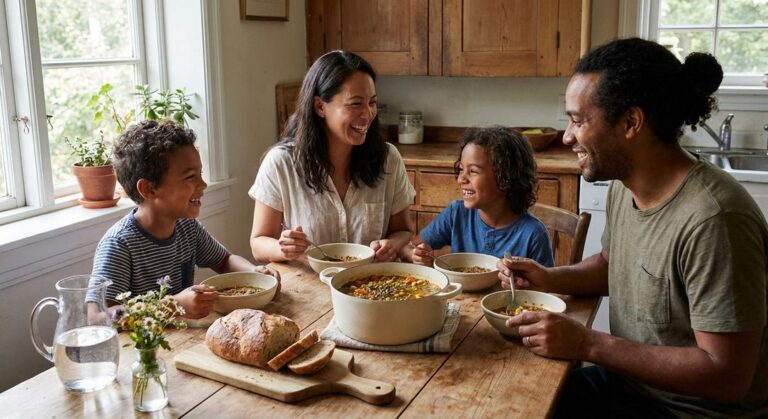
They are also not joyless. A bowl of lentil soup with lemon and toast can be deeply comforting. Bean tacos can disappear faster than a packet of biscuits in a staff room. Fried rice made from leftovers can taste like evidence that civilization is still functioning.
Prices vary by country, region, season, and supermarket mood swings, so the figures here are estimates rather than commandments. But the broader principle travels well: healthy food becomes cheapest when you buy basic ingredients and combine them with flavor, not when you chase products wearing health halos.
What “Cheap and Healthy” Really Means 🥕
Before we raid the pantry, we need to define our terms. A cheap healthy meal is not merely low in cost. Instant noodles are cheap; a dinner consisting only of them is less a meal than a sodium seminar. On the other hand, wild salmon with quinoa and organic asparagus may be healthy, but it is not what most families mean by affordable on a Tuesday.
A sensible target is a meal that provides a mix of protein, fiber-rich carbohydrates, vegetables or fruit, and enough fat to make it satisfying. It should also be realistic. If a recipe requires six pans, three specialty vinegars, and a child who voluntarily eats fennel, it has wandered out of family-budget territory and into lifestyle-magazine fiction.
The most economical healthy meals are not necessarily the lowest-calorie meals. They are the meals that deliver nutrients, fullness, and repeatability for the least money.
For a family of four, a genuinely budget-friendly dinner often falls somewhere between $6 and $12 if you cook from basic ingredients. Breakfasts can be even cheaper. Lunches depend heavily on leftovers, which is why dinner planning quietly determines the next day’s budget as well.
One of the great myths of modern shopping is that “healthy” means buying things packaged in beige paper with small forests printed on the label. In practice, some of the healthiest cheap foods are gloriously unglamorous: dried lentils, eggs, plain oats, cabbage, carrots, peanut butter, brown rice, canned sardines, chickpeas, and frozen spinach. They do not pose well for social media. They do, however, feed people.
The Budget Pantry That Makes Dinner Possible 🧅
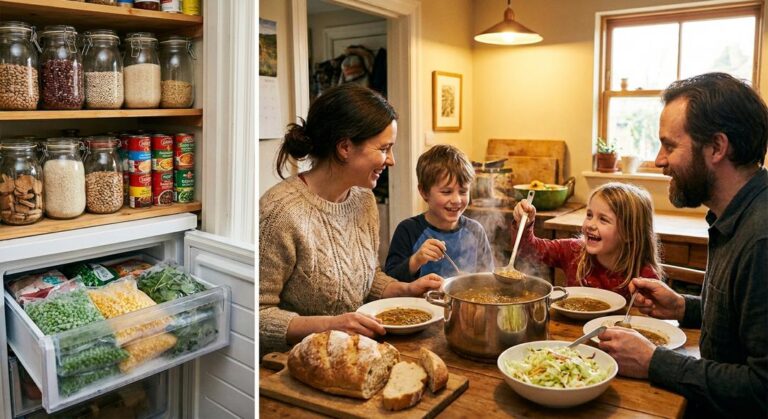
Cheap healthy cooking begins before the stove is lit. It begins with the quiet architecture of a pantry. If you have a few sturdy staples, you are never starting from zero, and that alone can save a family from the most expensive phrase in domestic life: “Should we just order something?”
A practical budget pantry does not need to be enormous. In fact, too much “stocking up” can backfire if it turns into a museum of stale grains and mysterious jars. The goal is to keep ingredients that combine easily and earn their shelf space.
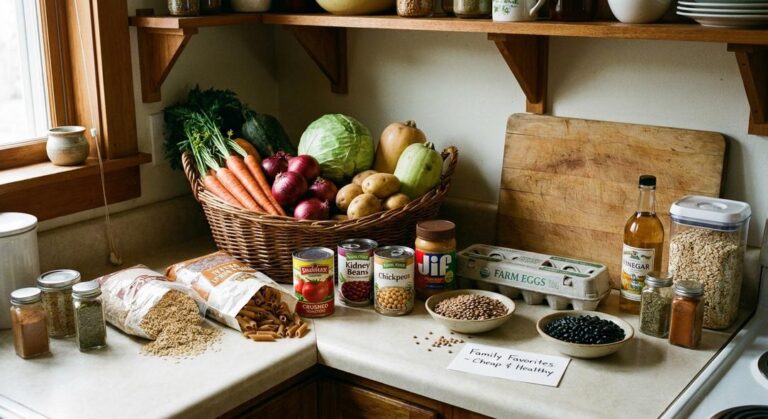
- Beans and lentils: dried are cheapest, canned are still economical and much faster.
- Rice, oats, pasta, and tortillas: inexpensive carbohydrates that stretch meals and satisfy hungry people.
- Eggs: a versatile protein for breakfast, lunch, or emergency dinners.
- Frozen vegetables: peas, spinach, broccoli, corn, and mixed vegetables reduce waste and cook quickly.
- Canned tomatoes: the beginning of soups, stews, sauces, curries, and chili.
- Potatoes and sweet potatoes: filling, nutritious, and usually cheaper than many packaged sides.
- Onions, carrots, and cabbage: long-lasting vegetables that form the backbone of countless meals.
- Peanut butter, yogurt, and cheese in modest amounts: useful for protein, flavor, and making simple meals feel finished.
- Basic seasonings: salt, pepper, garlic powder, chili powder, cumin, curry powder, dried herbs, vinegar, soy sauce, and mustard.
Notice what is missing: expensive “superfoods.” Chia seeds, spirulina, and artisan protein powders have their place if you like them and can afford them, but they are not required for health. A pot of lentils is not made less virtuous because it lacks a wellness influencer’s blessing. 🌱
The most cost-effective habit is learning to cook around what you already own. If you have rice, frozen peas, eggs, and soy sauce, you have fried rice. If you have lentils, canned tomatoes, carrots, and curry powder, you have dinner. If you have beans, tortillas, and cabbage, you have tacos with crunch and dignity.
The Cheapest Healthy Meals for Four 🍛
Here are the meals that consistently perform well on price, nutrition, and family acceptance. They are deliberately flexible. Swap vegetables. Change seasonings. Use what is on sale. The recipe police are underfunded and unlikely to respond.
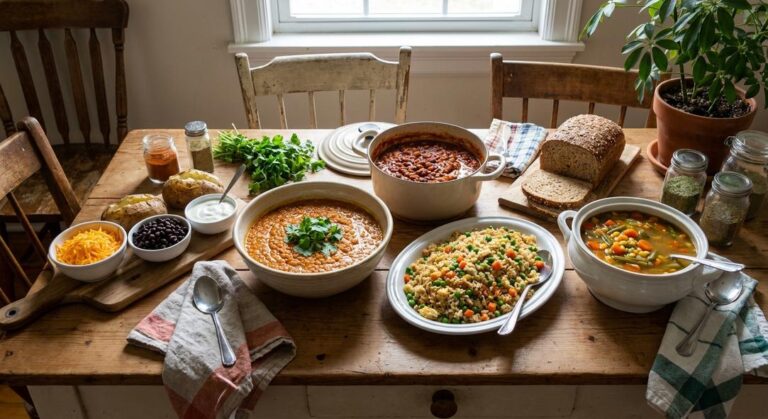
- Lentil soup with carrots, onions, and toast: A pound of dried lentils, a few carrots, an onion, canned tomatoes or broth, and spices can feed four generously, often with leftovers. Add a squeeze of lemon or a spoonful of yogurt if available. Estimated cost: $5 to $8.
- Bean and rice bowls: Cook rice, warm black beans or pinto beans with cumin and garlic, add frozen corn, shredded cabbage, salsa, or a little cheese. It is cheap, filling, and easy to customize for picky eaters. Estimated cost: $7 to $10.
- Vegetable egg fried rice: Leftover rice becomes dinner with eggs, frozen peas and carrots, onion, and soy sauce. Add tofu, edamame, or a bit of leftover chicken if you have it. Estimated cost: $6 to $9.
- Chickpea curry with rice: Canned or cooked chickpeas simmered with canned tomatoes, onion, curry powder, and frozen spinach make a nourishing meal with excellent leftovers. Estimated cost: $7 to $11.
- Pasta with tomato-lentil sauce: Red lentils disappear beautifully into tomato sauce, adding protein and fiber without triggering suspicion among children who believe legumes are a conspiracy. Serve with a side of frozen broccoli or cabbage slaw. Estimated cost: $8 to $12.
- Baked potatoes with beans and vegetables: Potatoes are cheap, comforting, and unfairly maligned. Top them with chili beans, broccoli, yogurt, or a modest amount of cheese. Estimated cost: $6 to $10.
- Oatmeal with peanut butter and fruit: Breakfast-for-dinner is not defeat; it is strategy. Oats cooked with milk or water, topped with peanut butter, banana, apple, or frozen berries, make a fast, inexpensive meal. Add boiled eggs on the side if you want more protein. Estimated cost: $4 to $8.
- Cabbage and noodle stir-fry: Cabbage is one of the great budget vegetables: sturdy, nutritious, and willing to sit in the fridge without drama. Stir-fry it with noodles, eggs or tofu, garlic, and soy sauce. Estimated cost: $6 to $9.
- Turkey, bean, or lentil chili: If ground meat is affordable, use half the amount and stretch it with beans and tomatoes. If not, make it all-bean or lentil chili. Serve with rice, baked potatoes, or cornbread. Estimated cost: $8 to $13.
- Homemade vegetable soup with grilled cheese or toast: Use carrots, potatoes, cabbage, frozen vegetables, beans, pasta, or rice. Soup is where leftovers go to become respectable. Estimated cost: $6 to $10.
The beauty of these meals is that none require perfect conditions. You can make them with a tired onion, frozen vegetables, and the last scoop of rice. They accept substitutions like old friends. If you are missing spinach, use peas. If you are out of rice, use potatoes. If nobody likes chickpeas, first of all, my condolences; second, use white beans.
A family budget meal should be judged not by how photogenic it is, but by whether it fills the table, nourishes the body, and leaves enough money for tomorrow.
How to Build a Cheap Healthy Meal Without a Recipe 🥘
Recipes are useful, but formulas are liberating. Once you understand the basic pattern, you can cook from what you have rather than shopping for what a recipe demands. That is where real savings live. 🧂
The most dependable budget meal formula is simple: base plus protein plus vegetables plus flavor. It sounds almost too obvious, but it is the quiet engine behind many of the world’s best everyday meals.
- Choose a base: rice, pasta, oats, potatoes, tortillas, noodles, couscous, or bread.
- Add a protein: beans, lentils, eggs, tofu, canned fish, chicken thighs, yogurt, cheese, or peanut butter.
- Add vegetables: frozen peas, carrots, cabbage, broccoli, spinach, onions, peppers, canned tomatoes, or seasonal produce.
- Add flavor: salsa, soy sauce, curry powder, garlic, chili, lemon, vinegar, herbs, mustard, or a small amount of cheese.
With this formula, rice can become a burrito bowl, curry, stir-fry, soup, or pilaf. Potatoes can become chili potatoes, hash, soup, or a sheet-pan dinner. Lentils can become soup, sauce, patties, stew, or taco filling. This is why pantry cooking is powerful: one ingredient can wear many hats, and some of them are surprisingly stylish.
For families with children, deconstructed meals can be a peace treaty. Instead of mixing everything together, place components separately: rice, beans, vegetables, sauce, cheese. Adults can assemble a bowl with enthusiasm; children can negotiate with the peas on their own terms. This approach reduces waste because fewer plates return looking like archaeological sites.
A Sample Three-Day Budget Meal Plan 🍽️
A plan does not need to cover every mouthful for the next lunar cycle. Even three days of structure can prevent chaos. Here is a simple example for a family of four using overlapping ingredients. The point is not to follow it exactly, but to see how one meal can set up the next.
- Day one dinner: Make a large pot of lentil tomato soup with onions, carrots, canned tomatoes, and spices. Serve with toast or rice. Save leftovers.
- Day two lunch: Reheat leftover soup and add a handful of cooked pasta or rice to make it feel new.
- Day two dinner: Cook rice and make bean bowls with seasoned beans, cabbage slaw, frozen corn, salsa, and a little yogurt or cheese.
- Day three lunch: Use leftover rice and beans in tortillas, or serve them as quick bowls with chopped vegetables.
- Day three dinner: Turn remaining rice into egg fried rice with frozen vegetables and soy sauce.
This kind of planning works because it is not really about self-discipline. It is about reducing the number of decisions required when everyone is tired. Decision fatigue is expensive. It buys takeout, convenience snacks, and the suspiciously pricey “family meal deal” that somehow still leaves someone hungry.
If you cook one large pot of beans, rice, lentils, or soup at the start of the week, future-you may briefly consider writing present-you a thank-you note. Future-you will not actually write it, because future-you still has laundry, but the sentiment will be there. ✨
Where the Savings Really Come From 🛒
The cheapest healthy meals are not only about choosing low-cost ingredients. They are about avoiding hidden waste: half-used herbs turning tragic in the crisper, specialty sauces used once, breakfast cereal priced like rare gemstones, and snacks that evaporate before anyone admits opening them.
Smart shopping begins with a short inventory. Look in the fridge, freezer, and pantry before making a list. This sounds dull because it is. It also works. Most families already own the beginning of several meals; they simply do not see them because those meals are disguised as “a bit of rice,” “some carrots,” and “that can of tomatoes behind the coconut milk.”
- Buy store brands: For basics such as oats, rice, beans, pasta, tomatoes, and frozen vegetables, the difference is often branding rather than quality.
- Use frozen produce: It is picked ripe, lasts for months, and prevents the expensive guilt of slimy spinach.
- Compare unit prices: Bigger packages are not always cheaper, but unit pricing reveals the truth.
- Choose cheaper proteins: Lentils, beans, eggs, tofu, canned tuna, sardines, and chicken thighs often beat pricier cuts and processed meats.
- Stretch meat when you use it: Add lentils, beans, mushrooms, oats, or grated vegetables to ground meat dishes.
- Shop seasonally: In-season produce usually tastes better and costs less.
- Repeat meals without shame: A dependable rotation saves money and mental energy.
There is a peculiar pressure to make every dinner novel, as if families were tiny restaurants with critics arriving nightly. But repetition is not failure. It is how people have always eaten. A weekly bean night, pasta night, soup night, and egg night can form the backbone of a healthy, affordable routine.
The Nutrition Case for Budget Foods 🫘
Budget foods deserve better public relations. Lentils are rich in protein, fiber, iron, and folate. Beans support heart health and help keep people full. Oats provide soluble fiber. Potatoes offer potassium and vitamin C. Cabbage brings crunch, vitamin K, and remarkable staying power. Eggs provide high-quality protein and important micronutrients. None of these foods need a rebrand; they need a good recipe and perhaps a little garlic.
Fiber is especially important. Many inexpensive whole foods are naturally high in fiber, which helps with fullness and digestive health. This is one reason bean-based meals can be so satisfying despite their modest price. They do not merely fill space on the plate; they help people stay full after dinner, reducing the expensive grazing that sometimes follows a too-light meal.
The old staples are still with us for a reason: beans, grains, roots, and seasonal vegetables are affordable, adaptable, and nutritionally serious.
This does not mean every meal must be vegetarian. For many families, the most realistic approach is “less meat, better used.” A small amount of bacon can flavor a bean soup. One chicken thigh per person can anchor a tray of roasted potatoes and vegetables. A half-pound of ground turkey can become chili for four when joined by beans and tomatoes. Meat as seasoning rather than monument is an old trick, and a good one. 🍗
A Few Meals That Sound Too Cheap to Be This Good 🍳
Some of the best low-cost meals are almost embarrassingly simple. They do not require culinary bravery, just a willingness to let modest ingredients do their job.
- Eggs in tomato sauce: Simmer canned tomatoes with onion, garlic, and spices, then crack eggs into the sauce and cover until set. Serve with toast or rice.
- Peanut noodles: Toss noodles with peanut butter thinned with hot water, soy sauce, vinegar, and a little sugar or honey. Add shredded cabbage and carrots.
- Bean quesadillas: Mash beans with spices, spread on tortillas, add a little cheese, and toast in a pan. Serve with cabbage slaw.
- Potato hash with eggs: Pan-cook diced potatoes and onions, add leftover vegetables, and top with fried or scrambled eggs.
- Red lentil dal: Simmer red lentils with curry powder or turmeric, garlic, and onion. Serve over rice with yogurt if you have it.
- Tuna and white bean salad: Mix canned tuna with white beans, chopped celery or cabbage, lemon or vinegar, and a little olive oil or yogurt. Serve with toast.
These are not emergency meals in the sad sense. They are the sort of meals one returns to because they are practical, warm, and forgiving. The potato does not judge you. The egg does not ask whether you remembered to marinate anything. The bean, frankly, has seen worse.
Making It Work in Real Family Life 🏡
Healthy budget cooking collapses if it depends on heroic effort. Families need systems that survive homework, late shifts, picky appetites, and the emotional weather of ordinary life. The most useful system is a small rotation of meals everyone tolerates, with occasional variations to keep the cook from losing the will to chop onions.
Pick five dependable dinners and keep their ingredients on hand. For example: lentil soup, bean tacos, egg fried rice, pasta with lentil tomato sauce, and baked potatoes with toppings. That is not a prison sentence; it is a safety net. You can still experiment when time, money, and morale permit.
It also helps to make the healthy choice the easy choice. Wash carrots when you bring them home. Keep frozen vegetables visible. Cook extra rice deliberately. Store leftovers in portions. Put fruit where people can see it. Humans, despite our lofty self-image, are heavily influenced by what is easiest to grab.
Children can be invited into the process without turning dinner into a Montessori documentary. Let them choose between peas and carrots, rice and potatoes, apples and bananas. Small choices can increase cooperation. Also, sometimes they will still reject the meal for reasons known only to them and perhaps to the moon. That does not mean you failed. 🌙
In the end, the cheapest healthy family meals are not exotic. They are sturdy. They are soups, bowls, curries, hashes, oats, eggs, beans, potatoes, and pasta made with intelligence and thrift. They are meals that understand life is expensive, time is limited, and people are hungry now.
A family of four can eat well without turning every shopping trip into a financial cliffhanger. The secret is not a secret at all: buy simple foods, cook them repeatedly in different ways, waste as little as possible, and season with more confidence than money. Dinner does not have to be perfect to be nourishing. Sometimes it only has to be hot, plentiful, and served before anyone starts eating crackers over the sink.
FAQ
What is the cheapest healthy dinner for a family of four?
Lentil soup is often one of the cheapest healthy dinners. Dried lentils, carrots, onions, canned tomatoes, and basic spices can create a filling, protein-rich meal for about $5 to $8, often with leftovers.
Is it cheaper to cook with dried beans or canned beans?
Dried beans are usually cheaper per serving, especially for large families. Canned beans cost more but save time and are still economical compared with many meats or prepared foods. If convenience prevents takeout, canned beans are a bargain.
Can a healthy budget meal include meat?
Yes. The key is to use meat strategically. Chicken thighs, canned fish, or a small amount of ground meat can fit a budget if paired with beans, lentils, rice, potatoes, or vegetables. Meat does not need to dominate the plate.
Are frozen vegetables as healthy as fresh vegetables?
Often, yes. Frozen vegetables are usually picked and frozen at peak ripeness, and they can be highly nutritious. They also reduce waste, which makes them especially useful for families trying to save money.
How can I make cheap meals less boring?
Use sauces, spices, and toppings. The same beans and rice can taste Mexican-inspired with salsa and cumin, Indian-inspired with curry powder and yogurt, or stir-fry style with soy sauce and garlic. Flavor is usually cheaper than entirely new ingredients.