⚡ Key Takeaways
- ✅ The cheapest healthy family meals usually begin with beans, lentils, eggs, oats, rice, potatoes, pasta, and seasonal vegetables.
- ✅ A nutritious dinner for four can often be cooked for $6 to $12, depending on where you shop and what you already have in the pantry.
- ✅ Frozen vegetables are often just as nutritious as fresh ones and can dramatically reduce waste.
- ✅ Meat can still appear on a budget menu, but it works best as a flavoring ingredient rather than the main event.
- ✅ Batch cooking soups, stews, sauces, and grains saves money, time, and a great deal of weeknight panic.
- ✅ The healthiest cheap meals are built around protein, fiber, vegetables, and enough fat to make them satisfying.
- ✅ Good budget cooking is not about deprivation; it is about repetition with imagination.
There is a particular kind of household optimism that arrives at 5:12 p.m., when everyone is hungry, someone has misplaced a shoe, the fridge contains half an onion, and a parent says, with the confidence of a battlefield general, “I’ll make something.” 🍲
For families trying to eat well without treating the grocery store like a luxury boutique, that “something” matters. Food prices have turned many shopping trips into minor moral dramas: the berries look radiant, the salmon looks virtuous, and the checkout total looks like it has been edited by a hedge fund. Yet healthy family meals do not have to be expensive, joyless, or made entirely of beige ingredients.
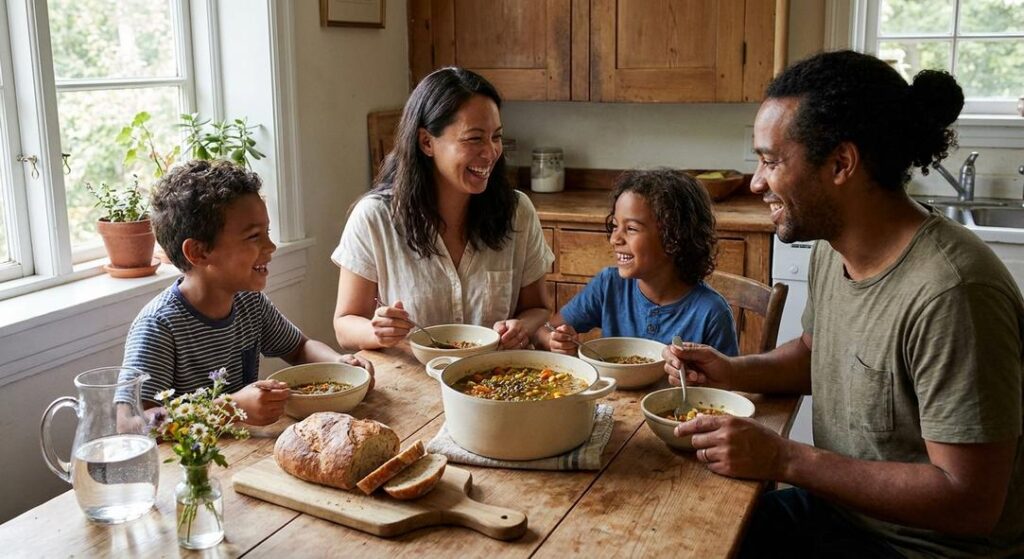
The cheapest healthy meals for a family of four tend to share a few traits. They are based on inexpensive staples, stretched with vegetables, seasoned properly, and cooked in quantities large enough to create leftovers. They are not always glamorous. Lentil soup will not arrive at the table wearing a tuxedo. But it will feed four people, nourish them, and leave enough money for tomorrow’s breakfast.
The secret to cheap healthy cooking is not finding one miracle recipe. It is learning a handful of reliable formulas that can absorb whatever is on sale.
What Makes a Meal Cheap, Healthy, and Family-Friendly? 🥕
A cheap meal is not automatically a healthy one, and a healthy meal is not automatically cheap. The sweet spot is a dish that supplies enough protein, fiber, vitamins, and calories to keep a family satisfied without leaning too heavily on ultra-processed foods. That does not mean every dinner must look like a nutrition textbook. It means the plate should make sense.
For a family of four, the most economical healthy meals usually contain four building blocks:
- A low-cost protein: beans, lentils, eggs, canned tuna, yogurt, tofu, chicken thighs, ground turkey, or peanut butter.
- A filling carbohydrate: rice, oats, pasta, potatoes, tortillas, barley, whole-wheat bread, or couscous.
- Vegetables or fruit: frozen peas, carrots, cabbage, canned tomatoes, onions, apples, bananas, greens, or whatever is seasonal.
- Flavor and fat: olive oil, butter, spices, garlic, soy sauce, vinegar, cheese, herbs, or a squeeze of lemon.
The “healthy” part often comes from balance rather than perfection. A bean burrito with rice, salsa, cabbage, and a little cheese can be more useful to a real family than a delicate quinoa bowl that everyone politely avoids. Food must first be eaten to be nutritious, a fact occasionally forgotten by people who have never watched a six-year-old negotiate with broccoli.
Prices vary by region, store, and season, of course. But in many households, a budget-friendly dinner for four sits somewhere between $6 and $12. Breakfasts and lunches can be even cheaper if built around oats, eggs, leftovers, soup, and sandwiches.
The Cheapest Healthy Meal Champions 🫘
If there were an awards ceremony for low-cost nutrition, beans and lentils would need a larger mantelpiece. They are high in protein and fiber, shelf-stable, forgiving, and astonishingly cheap. Dry beans are usually the best value, but canned beans are still economical and far more convenient on a Tuesday night when patience is thin.
Here are some of the most reliable budget staples to keep in rotation:
- Lentils: Cook quickly, require no soaking, and work in soups, curries, sauces, and sloppy joe-style fillings.
- Black beans and pinto beans: Ideal for burritos, rice bowls, chili, tacos, and soups.
- Eggs: Still one of the most versatile proteins, especially for breakfast-for-dinner meals.
- Oats: Excellent for breakfast, but also useful in meatloaf, veggie burgers, and baked oatmeal.
- Potatoes and sweet potatoes: Cheap, filling, nutritious, and beloved by nearly everyone with taste buds.
- Rice: A classic stretcher of meals, especially when paired with beans, vegetables, eggs, or chicken.
- Cabbage: Long-lasting, inexpensive, and better than its reputation, particularly when sautéed or shredded into slaws.
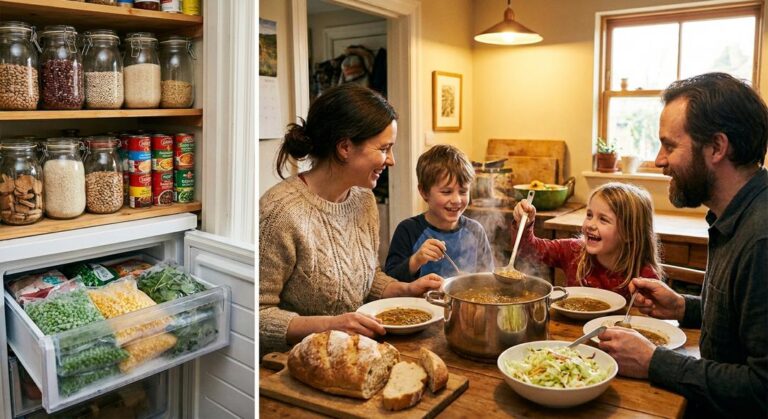
- Frozen vegetables: Often cheaper than fresh, already prepped, and unlikely to become a sad science experiment in the crisper drawer.
- Canned tomatoes: The backbone of soups, stews, pasta sauces, shakshuka, chili, and curries.
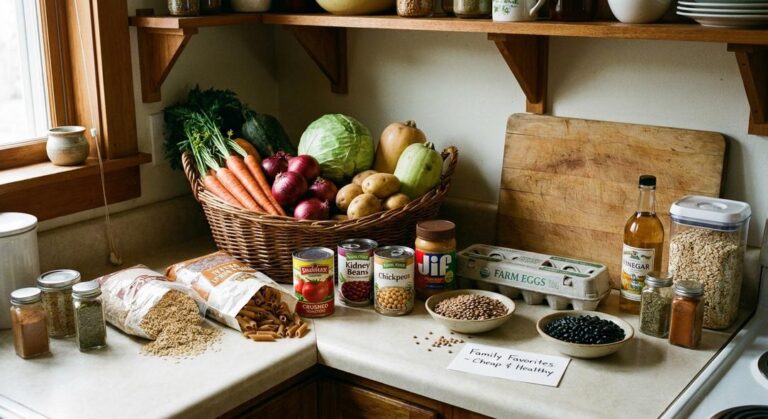
There is also a psychological advantage to keeping these ingredients on hand. A pantry with rice, beans, lentils, pasta, oats, canned tomatoes, peanut butter, and a few spices is not just storage; it is insurance. It turns “we have nothing to eat” into “we have options.”
The most economical ingredient is the one that gets used completely. Waste is the hidden tax on family groceries.
Ten Cheap Healthy Dinners for a Family of Four 🍽️
The following meals are inexpensive, nourishing, and flexible. The estimated costs assume basic pantry items like salt, pepper, and oil are already in the kitchen. If not, the first shopping trip may cost more, but those ingredients will serve many meals.
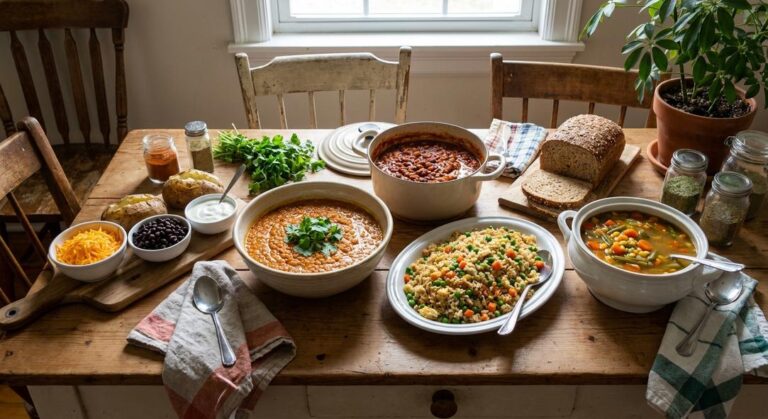
- Lentil vegetable soup: Simmer lentils with onion, carrots, celery, canned tomatoes, garlic, and broth or water. Add spinach or frozen vegetables near the end. Serve with toast or rice. Estimated cost: $6 to $9.
- Bean and rice burritos: Fill tortillas with seasoned beans, rice, shredded cabbage, salsa, and a little cheese. Add scrambled eggs if you want more protein. Estimated cost: $8 to $11.
- Egg fried rice: Use leftover rice with eggs, frozen peas and carrots, soy sauce, onion, and a drizzle of oil. Add tofu or leftover chicken if available. Estimated cost: $5 to $8.
- Chickpea curry with rice: Cook canned or dry chickpeas with canned tomatoes, onion, curry powder, garlic, and frozen spinach. Serve over rice. Estimated cost: $7 to $10.
- Whole-wheat pasta with tomato-lentil sauce: Red lentils melt into tomato sauce and create a protein-rich, hearty pasta dinner. Estimated cost: $7 to $10.
- Baked potato bar: Bake potatoes and top them with beans, broccoli, yogurt, cheese, salsa, or chili leftovers. Estimated cost: $6 to $10.
- Vegetable frittata: Eggs, potatoes, onions, and frozen vegetables become dinner with toast and fruit on the side. Estimated cost: $7 to $11.
- Turkey or bean chili: Use beans, canned tomatoes, onion, spices, and either a small amount of ground turkey or extra beans. Serve with rice or cornbread. Estimated cost: $9 to $13.
- Peanut noodles with vegetables: Toss noodles with peanut butter, soy sauce, vinegar, garlic, and shredded carrots or cabbage. Add edamame or tofu when the budget allows. Estimated cost: $6 to $9.
- Chicken thigh tray bake: Roast chicken thighs with potatoes, carrots, onions, and seasoning. Bone-in thighs are often cheaper and more flavorful than breasts. Estimated cost: $10 to $14.
The beauty of these meals is that they are not fragile. No chickpeas? Use white beans. No rice? Use potatoes. No spinach? Use peas. No child willing to eat anything green? Chop it smaller and proceed with the calm expression of a diplomat. 🥬
Cheap Healthy Breakfasts That Actually Fill People Up 🌞
Breakfast is where families can save serious money without much sacrifice. The trick is to avoid relying exclusively on boxed cereal, which can be expensive per serving and not always especially filling. Oats and eggs may not have cartoon mascots, but they work harder.
Some of the cheapest healthy breakfasts for four include:
- Oatmeal with bananas and peanut butter: Add cinnamon and a splash of milk. It is warm, filling, and costs very little.
- Scrambled eggs with toast and fruit: A simple protein-rich breakfast that can also become dinner.
- Baked oatmeal: Combine oats, milk, eggs, apples or bananas, and cinnamon, then bake once and eat for several mornings.
- Yogurt bowls: Use plain yogurt with oats, fruit, and a small drizzle of honey or jam.
- Breakfast burritos: Fill tortillas with eggs, beans, potatoes, and salsa, then freeze extras.
If children are involved, breakfast repetition is not a failure. It is often a mercy. A rotating cast of three dependable breakfasts can reduce both cost and morning decision fatigue. There are only so many choices one should have to make before coffee.
Lunches: The Leftover Economy 🥪
Lunch is where good dinner planning pays dividends. The cheapest healthy lunch is often last night’s dinner wearing a new hat. Chili becomes a baked potato topping. Roasted vegetables become a wrap. Rice and beans become a bowl with salsa and shredded lettuce. Soup returns, heroically, with toast.
For families packing school or work lunches, the goal is food that travels well and will not emerge from the lunchbox looking punished. A few dependable options:
- Hummus and vegetable wraps: Use tortillas, hummus, shredded carrots, cabbage, cucumber, or leftover roasted vegetables.
- Bean salad boxes: Combine beans, corn, chopped vegetables, rice or pasta, and a simple vinaigrette.
- Egg salad sandwiches: Add grated carrot or chopped celery for crunch.
- Soup in a thermos: Lentil, vegetable, chicken rice, or bean soups are affordable and comforting.
- Peanut butter banana sandwiches: Not fancy, but nutritionally respectable and beloved by many children.
One practical approach is to cook dinner with lunch in mind. If the family needs four dinners and two adult lunches the next day, cook six portions. This sounds obvious, but the difference between four portions and six portions can be the difference between a calm lunch and a $14 sandwich bought in mild defeat.
How to Make Cheap Meals Taste Expensive 🧄
Budget cooking rises or falls on seasoning. A pot of beans without flavor is an obligation. A pot of beans with garlic, cumin, onion, lime, and a little olive oil is dinner. The difference is not wealth; it is attention.
Families on a budget should slowly build a flavor kit. You do not need every spice in the supermarket, especially not the mysterious jars that cost more than a paperback novel. Start with a few hardworking basics:
- Garlic powder and onion powder: Useful when fresh aromatics are gone.
- Cumin: Excellent for beans, chili, rice, tacos, and soups.
- Italian seasoning or oregano: Helpful for pasta sauce, roasted vegetables, and soups.
- Curry powder: A shortcut to flavorful chickpeas, lentils, potatoes, and vegetables.
- Smoked paprika: Adds depth to beans, eggs, roasted potatoes, and stews.
- Soy sauce: Brings salt and savory depth to rice, noodles, stir-fries, and marinades.
- Vinegar or lemon juice: Brightens cheap ingredients and keeps dishes from tasting flat.
Texture matters too. Add crunch with cabbage, toasted oats, seeds, croutons, or roasted chickpeas. Add creaminess with yogurt, mashed beans, tahini, peanut butter, or a modest sprinkle of cheese. A meal that includes soft, crunchy, salty, fresh, and warm elements will feel more generous than its price tag suggests.
Flavor is the budget cook’s great equalizer. Salt, acid, heat, and aromatics can make humble ingredients feel abundant.
A Sample One-Week Budget Dinner Plan 🗓️
A weekly plan does not need to be rigid. In fact, the best ones leave room for leftovers, mood swings, sales, and the occasional evening when cooking feels like an unreasonable demand from civilization.
Here is a simple seven-night plan for a family of four:
- Monday: Lentil vegetable soup with toast.
- Tuesday: Bean and rice burritos with cabbage slaw.
- Wednesday: Egg fried rice with frozen vegetables.
- Thursday: Chickpea curry with rice.
- Friday: Whole-wheat pasta with tomato-lentil sauce.
- Saturday: Baked potato bar with beans, broccoli, yogurt, and cheese.
- Sunday: Chicken thigh tray bake with potatoes and carrots.
This plan uses overlapping ingredients: onions, carrots, rice, beans, lentils, canned tomatoes, frozen vegetables, potatoes, and cabbage. That overlap is not boring; it is strategic. The more ways you can use the same ingredients, the less likely they are to spoil, sulk, or disappear into the back of the refrigerator.
If the budget is especially tight, replace the chicken dinner with another bean-based meal or eggs. If the budget has a little more room, add fruit, yogurt, salad greens, or fish once during the week. Healthy eating is not an all-or-nothing contest. It is a long series of ordinary choices, made while someone asks where the ketchup is.
Smart Shopping Habits That Lower the Bill 🛒
The cheapest healthy meals begin before the stove is switched on. They begin with a shopping list, a realistic sense of the week ahead, and the strength to avoid buying aspirational vegetables that no one has a plan for. We have all purchased a bunch of kale with the personality of a New Year’s resolution.
To stretch the grocery budget, try these habits:
- Shop your kitchen first: Check the pantry, freezer, and fridge before writing a list.
- Plan around what is on sale: Especially proteins, seasonal produce, and pantry staples.
- Buy store brands: For oats, rice, beans, pasta, canned tomatoes, frozen vegetables, and dairy, they are often nearly identical.
- Use frozen produce: It is prepped, long-lasting, and nutritionally strong.
- Compare unit prices: The bigger package is not always cheaper, but often is for staples.
- Limit single-use snacks: Individually packaged foods can quietly devour a budget.
- Cook once, eat twice: Double sauces, soups, rice, or roasted vegetables for future meals.
One of the most effective budget strategies is also the least glamorous: designate a leftovers night. Pull everything from the fridge, reheat what is safe, add eggs or tortillas if needed, and call it a buffet. Children may complain, but children also complain about socks. This is not always a useful metric.
The Bottom Line: Cheap Can Be Deeply Nourishing 🌱
The cheapest healthy meals to cook for a family of four are not exotic secrets. They are lentil soups, bean burritos, egg fried rice, chickpea curries, vegetable frittatas, baked potatoes, pasta with hearty sauce, and trays of roasted chicken and vegetables when the budget allows.
What makes these meals work is not just their price. It is their flexibility. They forgive substitutions. They welcome leftovers. They can be seasoned differently from week to week. They satisfy adults without requiring children to eat like tiny wellness influencers.
In a culture that often sells healthy eating as a premium lifestyle, there is something quietly radical about a pot of beans, a pan of eggs, or a tray of potatoes doing the job beautifully. A good family meal does not need to impress the internet. It needs to feed the people at the table, leave them well, and perhaps create enough leftovers for lunch.
That is not a compromise. That is kitchen wisdom.
FAQ ❓
What is the absolute cheapest healthy dinner for a family of four?
Lentil soup is one of the strongest contenders. Lentils are inexpensive, cook quickly, and provide protein and fiber. Add carrots, onions, canned tomatoes, and rice or bread on the side, and you can often feed four people for under $10.
Is it cheaper to cook vegetarian meals?
Often, yes. Beans, lentils, eggs, tofu, and peanut butter are usually cheaper than meat per serving. You do not have to become fully vegetarian to save money, though. Simply using meat less often, or using it as a flavoring rather than the centerpiece, can lower costs significantly.
Are frozen vegetables healthy enough for family meals?
Yes. Frozen vegetables are typically picked and frozen at peak ripeness, and they retain much of their nutritional value. They are also convenient, affordable, and reduce food waste, which makes them excellent for budget-conscious families.
How can I make cheap meals more appealing to children?
Use familiar formats: burritos, pasta, rice bowls, soups with toast, baked potatoes, and breakfast-for-dinner. Offer toppings when possible, such as cheese, yogurt, salsa, or crunchy cabbage. Children often respond better when they have a small amount of control over the final plate.
What pantry staples should I buy first on a tight budget?
Start with oats, rice, pasta, lentils, beans, canned tomatoes, peanut butter, potatoes, onions, frozen vegetables, eggs, and a few seasonings such as cumin, garlic powder, Italian seasoning, and soy sauce. These ingredients can produce dozens of cheap, healthy meals with very little waste.