⚡ Key Takeaways
- ✅ The cheapest healthy family meals usually start with beans, lentils, eggs, oats, rice, pasta, potatoes, frozen vegetables, and seasonal produce
- ✅ A family of four can often eat a balanced home-cooked dinner for less than the cost of one fast-food combo meal
- ✅ The best budget meals are not “poverty food”; they are the backbone of sensible kitchens everywhere
- ✅ Batch cooking soup, chili, curry, and pasta sauce saves both money and weeknight sanity
- ✅ Frozen and canned foods can be just as nutritious as fresh, especially when chosen wisely
- ✅ Meat can be used as a flavoring rather than the headline act, which lowers costs without making meals feel skimpy
- ✅ Planning around what you already own is the quiet superpower of cheap healthy cooking
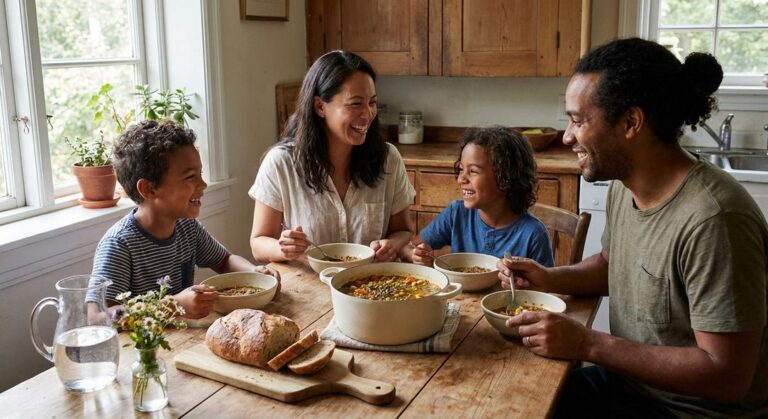
There is a particular kind of household arithmetic that happens around 5:30 p.m. The children are hungry, the adults are tired, and the refrigerator appears to contain one carrot, half an onion, and a jar of something suspiciously crusted at the lid. At that moment, the question “What are the cheapest healthy meals to cook for a family of four?” is not theoretical. It is not lifestyle content. It is survival with a chopping board. 🍲
The good news is that cheap healthy cooking is not a punishment. It does not require organic microgreens, moral superiority, or a pantry arranged by a Scandinavian minimalist. It requires a few dependable ingredients, a loose plan, and the willingness to let beans do the heavy lifting. Across cultures, the world’s most nourishing family meals have long been built from humble things: grains, legumes, eggs, vegetables, broth, scraps of meat, and spices used with affection.
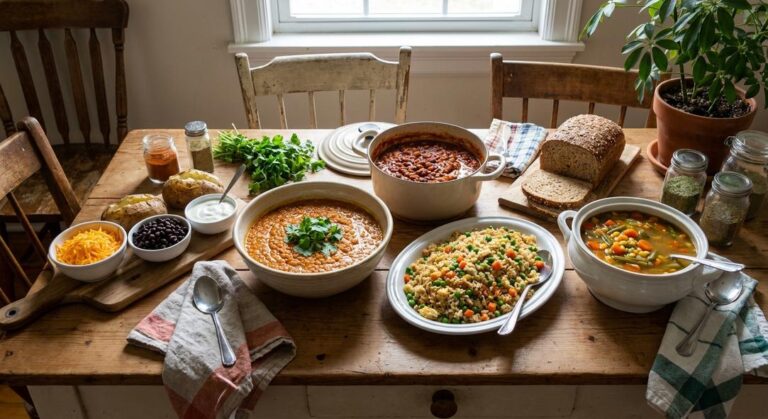
Food prices vary widely depending on where you live, but the principle remains steady: the cheapest healthy meals are built around low-cost staples with high nutritional return. Think lentil soup, bean chili, vegetable fried rice, baked potatoes with toppings, tuna pasta, egg frittata, oatmeal, chickpea curry, and homemade burrito bowls. These are not glamorous dishes, perhaps, but they have the dignity of showing up when needed.
The Budget Kitchen’s Golden Rule: Build Meals, Not Masterpieces 🥕
The secret to feeding four people cheaply is to stop thinking in terms of individual recipes and start thinking in formulas. A healthy budget meal usually has four parts: a filling base, a protein, vegetables, and flavor. Once you understand that, dinner becomes much less dramatic.
Here is the simplest framework:
- Base: rice, pasta, potatoes, oats, tortillas, bread, couscous, barley, or noodles
- Protein: beans, lentils, eggs, canned tuna, peanut butter, tofu, chickpeas, yogurt, or a small amount of chicken
- Vegetables: frozen mixed vegetables, cabbage, carrots, onions, spinach, canned tomatoes, zucchini, peas, or seasonal produce
- Flavor: garlic, onion, herbs, curry powder, soy sauce, salsa, lemon juice, vinegar, cheese, broth, or chili flakes
That formula can become fried rice, minestrone, burritos, curry, pasta bake, noodle bowls, hash, stew, or soup. It is less a recipe and more a reliable old coat: not fancy, but exactly what you reach for when the weather turns.
The healthiest cheap meals are rarely the most complicated. They are the ones that make inexpensive ingredients taste generous.
For a family of four, the cost sweet spot is often around meals that use little or no meat. That does not mean you must become vegetarian. It simply means using meat like a seasoning: a bit of bacon in lentil soup, a chicken thigh shredded into rice and beans, or a small amount of ground turkey stretched with oats, lentils, or vegetables. Your wallet will notice. Your dinner plate may not.
The Cheapest Healthy Ingredients Worth Keeping Around 🛒
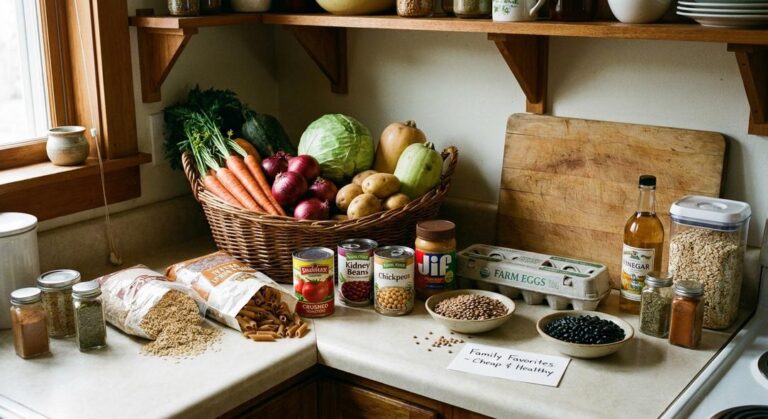
A thrifty kitchen is not necessarily a bare kitchen. In fact, the better stocked your pantry is with basic ingredients, the less likely you are to panic-buy expensive convenience foods. The trick is to buy ingredients that play well with others.
These are the workhorses:
- Dry lentils: quick-cooking, protein-rich, and ideal for soups, curries, and sauces
- Beans: canned for speed, dried for maximum savings; black beans, kidney beans, chickpeas, and pinto beans are especially useful
- Eggs: one of the best-value proteins, useful for breakfast, lunch, dinner, and emergency omelets
- Oats: cheap, filling, heart-healthy, and good beyond breakfast in pancakes or meatloaf-style dishes
- Rice: a blank canvas for stir-fries, bowls, soups, and casseroles
- Pasta: inexpensive, child-friendly, and easily balanced with vegetables and beans
- Potatoes: underrated, nutritious, filling, and extremely versatile
- Frozen vegetables: no peeling, no spoilage, no guilt at the bottom of the crisper drawer
- Canned tomatoes: the start of sauces, stews, chili, shakshuka, and soups
- Cabbage: often cheap, long-lasting, and excellent in slaws, stir-fries, soups, and tacos
- Peanut butter: not just for toast; it makes rich sauces for noodles, stews, and vegetable bowls
Frozen vegetables deserve a small defense speech. They are picked and frozen at peak ripeness, they are usually cheaper than fresh out-of-season produce, and they do not wilt in the fridge like delicate little aristocrats. A bag of frozen peas or spinach can rescue an otherwise beige dinner in under three minutes.
Canned foods also have a place. Choose low-sodium options when possible, rinse canned beans to reduce salt, and keep canned fish for meals that need protein fast. There is no shame in opening a can. The can opener may be one of the great unsung public health tools of the modern kitchen.
Ten Cheap Healthy Meals for a Family of Four 🍽️
Below are practical, flexible meals that tend to be low-cost, filling, and nutritionally sound. Exact prices depend on your region and where you shop, but these dishes are built from consistently affordable ingredients.
1. Lentil soup with carrots and tomatoes. Lentils are the quiet geniuses of the pantry. Simmer them with onion, carrots, canned tomatoes, garlic, and broth or water. Add spinach at the end if you have it. Serve with toast or rice. You get fiber, protein, iron, and a dinner that tastes better the next day.
2. Bean chili over rice. Use canned or cooked dried beans, canned tomatoes, onion, chili powder, and frozen corn. Rice turns it into a full meal. A sprinkle of cheese or spoonful of yogurt is lovely but optional. This is one of the cheapest ways to make everyone feel fed rather than merely “provided for.”
3. Vegetable fried rice with egg. Leftover rice is ideal. Fry onion, frozen vegetables, and rice in a little oil, then scramble in eggs and season with soy sauce or a pinch of salt. It is fast, flexible, and a superb way to use odds and ends. Add cabbage for crunch and volume.
4. Baked potato bar. Potatoes are economical and surprisingly nutritious, especially with the skin. Bake large potatoes and top them with beans, cottage cheese, yogurt, tuna, leftover chili, steamed broccoli, or a little grated cheese. Children enjoy assembling their own, which is half dinner and half edible craft project.
5. Chickpea curry with rice. Chickpeas, canned tomatoes, onion, curry powder, and frozen spinach make a satisfying meal in about 25 minutes. Add coconut milk if you have it, but plain yogurt or no creamy addition at all works fine. Rice stretches it beautifully.
6. Pasta with tomato-lentil sauce. Cook red lentils directly into tomato sauce until they soften and thicken. The result is similar to a meat sauce, rich and hearty, but far cheaper. Serve with pasta and a side of carrots, peas, or cabbage slaw.
7. Egg and vegetable frittata. Eggs plus leftover vegetables equals dinner with very little ceremony. Add potatoes, onions, spinach, peppers, or peas. Serve with toast or a simple salad. A frittata is what happens when leftovers put on a clean shirt.
8. Tuna and white bean pasta. Combine pasta with canned tuna, white beans, garlic, lemon or vinegar, and a handful of greens if available. It is high in protein and comes together quickly. If tuna is costly where you live, sardines or chickpeas can step in.
9. Oatmeal with fruit and peanut butter. Breakfast for dinner is not surrender; it is strategy. Oats cooked with milk or water, topped with banana, peanut butter, cinnamon, or frozen berries, make a cheap and nourishing meal. Add boiled eggs on the side if your family needs more protein.
10. Homemade burrito bowls. Layer rice, beans, corn, salsa, cabbage, and a small amount of cheese or yogurt. Add leftover chicken if available. Burrito bowls are an excellent way to turn inexpensive ingredients into something that feels abundant and colorful.
A cheap meal becomes a healthy meal when it includes fiber, protein, and color. The color does not have to be exotic; carrots and peas count.
A Sample Low-Cost Weekly Dinner Plan 🌙
A good weekly plan is not a prison sentence. It is a sketch. Families are unpredictable; children reject foods they loved yesterday, adults forget to defrost chicken, and someone inevitably eats the lunch ingredient at 11 p.m. Still, a plan gives you a fighting chance.
Here is a simple five-night plan using overlapping ingredients:
- Monday: Lentil soup with toast
- Tuesday: Bean chili over rice
- Wednesday: Vegetable fried rice with egg
- Thursday: Baked potatoes topped with leftover chili
- Friday: Pasta with tomato-lentil sauce and frozen peas
This plan repeats ingredients without repeating meals too aggressively. Lentils appear twice but behave differently. Rice supports chili one night and becomes fried rice the next. Leftover chili gets a second life on potatoes. This is not laziness. This is domestic logistics, and it deserves applause.
For lunches, leftovers can go into thermoses, wraps, or bowls. For breakfast, oats, eggs, toast, yogurt, or peanut butter sandwiches keep costs steady. The great advantage of cooking this way is that ingredients stop being isolated purchases and start becoming a system.
How to Make Cheap Meals Taste Less Cheap 🌶️
There is a difference between inexpensive and joyless. The former is a budget strategy; the latter is a culinary misdemeanor. A little flavor goes a long way, and many of the best flavor boosters are inexpensive.
Keep a few of these on hand if your budget allows:
- Garlic and onions: the foundation of soups, sauces, curries, and stir-fries
- Vinegar: a splash brightens beans, greens, soups, and slaws
- Lemon juice: useful for tuna, chickpeas, lentils, and roasted vegetables
- Soy sauce: adds depth to rice, noodles, eggs, and vegetables
- Curry powder: turns chickpeas, lentils, and potatoes into dinner
- Chili flakes or hot sauce: optional for children, essential for bored adults
- Plain yogurt: works as a topping, sauce, or cooling contrast
- Peanut butter: makes sauces feel rich without expensive ingredients
Texture matters too. If everything is soft, add crunch: cabbage slaw, toasted breadcrumbs, chopped peanuts, roasted chickpeas, or raw carrot sticks. If everything tastes flat, add acid: vinegar, lemon, tomatoes, pickles, or salsa. If everything feels too light, add fat: olive oil, yogurt, cheese, egg, or peanut sauce. These small adjustments can transform a pot of economical food into something people actually look forward to eating.
One of the easiest upgrades is a quick cabbage slaw. Slice cabbage thinly, add grated carrot, vinegar, a little oil, salt, and perhaps a spoonful of yogurt or mayonnaise. It keeps well, costs little, and gives rice-and-bean meals a welcome snap.
The Nutrition Piece: What “Healthy” Really Means Here 🧠
Healthy family meals do not need to be perfect. In fact, chasing perfection is one of the quickest ways to overspend. For everyday cooking, aim for balance most of the time: protein, fiber-rich carbohydrates, vegetables or fruit, and not too much added sugar or salt.
Beans and lentils are particularly valuable because they offer both protein and fiber. Eggs provide high-quality protein and important nutrients. Potatoes, oats, rice, and pasta can all be part of a healthy diet when paired with vegetables and protein. Frozen vegetables help close the nutrition gap on busy nights. Canned tomatoes, carrots, cabbage, onions, and peas may not be glamorous, but they are nutritional stalwarts.
It is also worth remembering that a meal’s healthfulness depends partly on what it replaces. A homemade bowl of rice, beans, salsa, cabbage, and egg may not win a wellness influencer’s beauty contest, but compared with many takeout meals it is cheaper, more filling, and often lower in sodium, saturated fat, and added sugars.
The goal is not to cook the perfect meal. The goal is to cook a good-enough meal often enough that your family is nourished and your budget can breathe.
For children, familiar formats help. Beans may be rejected in a bowl but accepted in a burrito. Vegetables may be ignored on a plate but eaten in soup. Eggs may become a frittata, fried rice, breakfast tacos, or egg salad. Parents know this dance well: same ingredient, different costume.
Smart Shopping Without Turning Life Into a Spreadsheet 🧾
Budget cooking begins before the pan hits the stove. Still, nobody wants to spend Saturday night comparing unit prices like a Victorian accountant. A few habits are enough.
- Shop your kitchen first. Look at what you already have before making a list. The cheapest ingredient is the one you already paid for.
- Plan three anchor meals. Choose meals that create leftovers or use the same ingredients in different ways.
- Buy store brands. For staples like oats, rice, beans, pasta, and canned tomatoes, the difference is often packaging, not quality.
- Use frozen vegetables strategically. They prevent waste and make quick meals more nutritious.
- Check the clearance shelf. Reduced produce, bakery bread, and marked-down meat can be useful if you can cook or freeze them quickly.
- Avoid buying too many “aspirational vegetables.” If nobody in the house eats eggplant, it is not a bargain at any price.
Buying in bulk can save money, but only when the food will actually be used. A giant sack of rice is practical. A warehouse tub of perishable salad greens may become compost with a membership card. Be honest about your household’s habits. Frugality works best when it cooperates with reality.
Another useful rule: make one flexible sauce per week. Tomato sauce, peanut sauce, yogurt sauce, or salsa can turn basic ingredients into several meals. Rice plus beans is fine. Rice plus beans plus salsa and cabbage is dinner with a pulse.
Cheap Healthy Meals That Kids Are More Likely to Eat 👧
Children can detect a parental nutrition agenda from three rooms away. The more earnestly you describe something as “packed with fiber,” the more likely they are to look at it as though it has personally insulted them. The solution is not trickery so much as familiarity.
Budget meals that often work well for families include:
- Bean and cheese quesadillas: use mashed beans, a little cheese, and whole-wheat tortillas if affordable
- Pasta with hidden lentil tomato sauce: the lentils melt into the sauce and add protein
- Egg fried rice: mild, filling, and easy to customize
- Loaded baked potatoes: let children choose toppings from a few low-cost options
- Breakfast-for-dinner plates: scrambled eggs, toast, fruit, and yogurt
- DIY burrito bowls: rice, beans, corn, salsa, and toppings served separately
Serving components separately can reduce dinnertime conflict. Instead of presenting a fully mixed chickpea curry to a skeptical child, serve rice, chickpeas, sauce, and vegetables in separate piles. Some children prefer control; frankly, so do many adults.
And if one child eats only rice and peas tonight, that does not mean you have failed. Family nutrition is measured over weeks and months, not one dramatic Tuesday.
Batch Cooking: The Cheapest Convenience Food You Can Make Yourself 🥘
Convenience is expensive because it solves a real problem: time. The answer is not to pretend busy families should lovingly simmer broth every evening while wearing linen. The answer is to create your own convenience.
Cook once, eat twice is the household budget’s favorite proverb. A large pot of chili can become dinner, lunch, potato topping, and burrito filling. A tray of roasted vegetables can become bowls, omelets, pasta, and wraps. Cooked rice can become fried rice, soup filler, or a base for curry.
Good batch-cooking candidates include:
- Lentil soup
- Bean chili
- Tomato-lentil pasta sauce
- Cooked rice or barley
- Roasted potatoes and carrots
- Shredded chicken stretched with beans or vegetables
- Breakfast oats portioned for several mornings
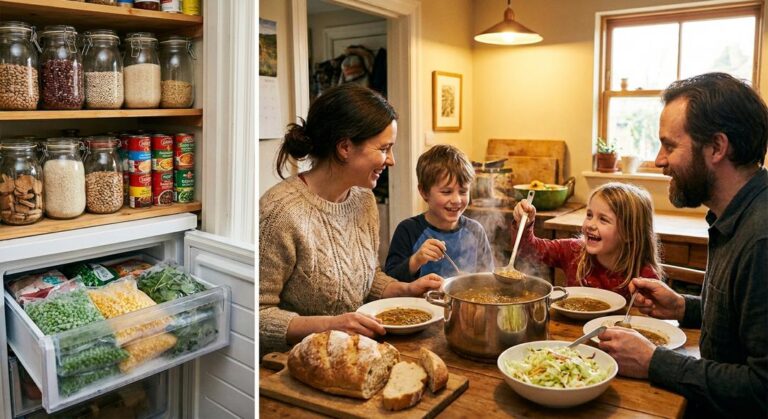
The freezer is also useful, even if it is small. Freeze flat bags of soup or sauce so they stack easily. Label them, because all frozen leftovers eventually become mysterious brown rectangles. Future you will be grateful for present you’s handwriting.
So, What Is the Absolute Cheapest Healthy Dinner? 💡
If forced to choose, the crown probably goes to lentils and rice with vegetables, closely followed by bean chili, vegetable fried rice with egg, and oatmeal with peanut butter and fruit. These meals combine low cost, high satiety, decent protein, fiber, and flexibility.
A basic lentil-and-rice dinner might include dry lentils, rice, onion, carrot, canned tomato, and seasoning. It can feed four people generously, especially with a side of cabbage slaw or frozen vegetables. It is the kind of meal that has sustained families across continents for generations, usually under different names and with better grandmothers supervising.
But the “cheapest” meal is not always the best answer. The best cheap healthy meal is the one your family will actually eat, that you can cook on a tired evening, with ingredients you can afford and find. A slightly more expensive dinner that prevents takeout may be the real bargain.
Healthy frugality is not about deprivation. It is about refusing to let a tight budget narrow your dinner table more than necessary. A pot of soup, a pan of fried rice, a tray of potatoes, a bowl of beans: these are ordinary miracles. They ask little and give much.
In the end, feeding a family well on a budget is less about culinary perfection than steady care. It is chopping an onion when you would rather collapse. It is learning that frozen peas are a friend. It is stretching a pound of food into four plates and, with luck, tomorrow’s lunch. It is practical love, served hot.
FAQ
What is the cheapest healthy meal for a family of four?
Lentils and rice with vegetables is one of the cheapest balanced meals. It provides protein, fiber, carbohydrates, and nutrients at a very low cost. Bean chili, vegetable fried rice with egg, and baked potatoes with beans are also excellent budget choices.
Is it cheaper to cook vegetarian meals?
Often, yes. Beans, lentils, eggs, tofu, and chickpeas are usually cheaper than meat and can still provide plenty of protein. You do not need to eliminate meat entirely; using smaller amounts for flavor can make meals affordable and satisfying.
Are frozen vegetables healthy?
Yes. Frozen vegetables are typically picked at peak ripeness and frozen quickly, preserving many nutrients. They are also budget-friendly because they do not spoil as quickly as fresh produce.
How can I make cheap meals more filling?
Add fiber and protein. Beans, lentils, eggs, oats, potatoes, brown rice, and whole-grain pasta can help meals feel more satisfying. A little healthy fat, such as peanut butter, yogurt, olive oil, or cheese, can also make a simple meal more substantial.
How do I feed picky kids on a tight budget?
Use familiar formats such as quesadillas, pasta, fried rice, baked potatoes, and burrito bowls. Serve ingredients separately when possible, and let children choose from a few affordable toppings. Repetition helps; many children need to see a food several times before accepting it.