⚡ Key Takeaways
- ✅ A $50 weekly grocery budget works best when it is planned around meals, not random ingredients
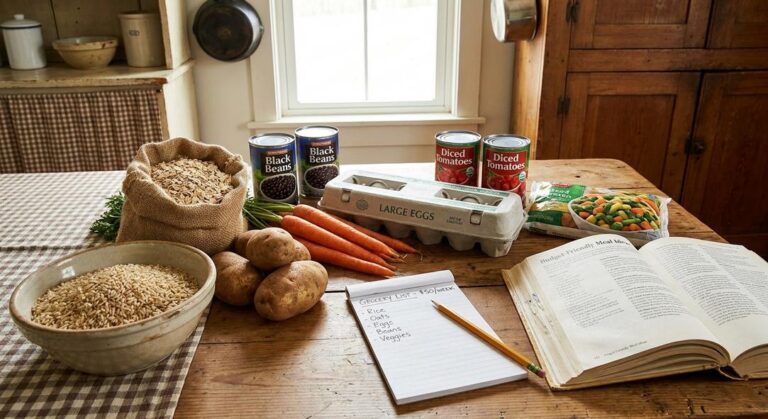
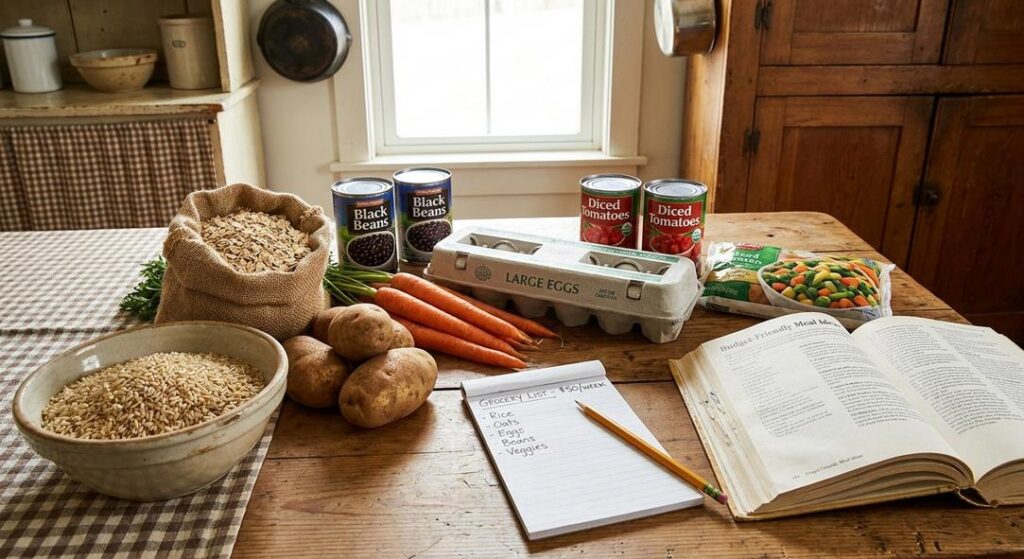
- ✅ Build your list from cheap “anchor foods” like rice, oats, beans, eggs, pasta, potatoes, and frozen vegetables
- ✅ Shop your kitchen first so you do not rebuy what is already quietly aging in your pantry
- ✅ Limit meat, snacks, drinks, and convenience foods because they can wreck the budget fast
- ✅ Repetition is not failure; it is the secret engine of affordable meal planning
- ✅ A realistic grocery budget includes a small cushion for prices, appetite, and human imperfection
- ✅ The goal is not Instagram-worthy austerity, but a food routine you can actually live with
A $50 weekly grocery budget has the whiff of a dare. It sounds like something a financial influencer might announce while standing beside a suspiciously full pantry and a sourdough starter named Gerald. But for many households, keeping groceries near $50 a week is not a stunt. It is rent, gas, childcare, student loans, medical bills, and the increasingly surreal price of berries all having a meeting in your checking account.
The trick is not to pretend food prices are reasonable. They are not. Nor is it to shame yourself into a life of lentils and moral superiority. The trick is to build a system: a modest, flexible, repeatable way of buying food that turns $50 from a vague hope into a working plan. 🛒
This article assumes one adult, or one adult with light leftovers, aiming for a week of basic meals. If you are feeding a family, teenagers, athletes, or anyone who considers cereal a beverage, the math changes. But the principles still hold: plan around staples, reduce waste, buy with purpose, and let the freezer do some of the heavy lifting.
Start With the Truth: $50 Is a Constraint, Not a Personality 🧾
The first mistake people make with a tight grocery budget is treating it like a character test. If you overspend, you “failed.” If you eat the same lunch four days in a row, you are “boring.” If you buy store-brand peanut butter, civilization has collapsed.
Let us be adults about this. A $50 grocery budget is a constraint. Constraints can be annoying, but they are also useful. A tight budget tells you what must be prioritized: filling foods, versatile ingredients, minimal waste, and meals you will actually eat when you are tired.
The budget will not work if it is based on fantasy. If you hate chickpeas, do not build your week around chickpeas. If you know you will not soak dried beans, buy canned beans. If you work late on Wednesdays, do not schedule a meal that requires four pans, spiritual resilience, and zesting anything.
The best grocery budget is not the cheapest one on paper. It is the cheapest one you can repeat without staging a rebellion by Thursday.
Before planning, decide what your $50 must cover. Is it only food, or food plus coffee, toiletries, paper towels, and cat treats for a small tyrant with whiskers? If household goods are included, separate them mentally. Otherwise, one bottle of laundry detergent can make you feel as if you have eaten $12.
The $50 Formula: Anchors, Flavor, Freshness, and Flexibility 🍳
A workable $50 grocery week usually has four parts: cheap staples, protein, produce, and flavor. Skip any one of these and the plan starts to wobble. Staples keep you full. Protein gives meals staying power. Produce adds nutrients and texture. Flavor keeps you from ordering takeout while muttering, “I deserve joy.”
Think of your grocery cart in categories rather than recipes. This prevents the classic budget tragedy: buying ingredients for one beautiful dish and then having nothing useful left for breakfast.
- Staples: rice, oats, pasta, tortillas, potatoes, bread, flour, or noodles
- Protein: eggs, beans, lentils, tuna, chicken thighs, tofu, peanut butter, yogurt, or cottage cheese
- Produce: bananas, carrots, cabbage, onions, apples, frozen vegetables, spinach, or whatever is on sale
- Flavor builders: salsa, soy sauce, bouillon, garlic, hot sauce, spices, mustard, vinegar, or cheese used strategically
- Backup foods: soup, canned tomatoes, frozen meals on sale, or one “emergency” meal that prevents delivery
Notice that “snacks” are not absent. They are simply not allowed to run the household like a tiny private equity firm. Chips, granola bars, sparkling drinks, and cookies can be included, but they must compete honestly with dinner. On a $50 budget, convenience foods are not evil; they are expensive employees who need to justify their salaries.
A rough allocation might look like this: $15 for staples, $15 for protein, $12 for produce, $5 for flavor or dairy, and $3 for a treat or cushion. It will not be perfect every week. Some weeks you buy olive oil or coffee and the entire budget winces. Other weeks your pantry is stocked and you coast.
Shop Your Kitchen Before You Shop the Store 🥫
The cheapest grocery item is the one you already own. This sounds obvious, yet many of us maintain pantries that resemble archaeological sites: three half-used bags of rice, a heroic can of pumpkin from a forgotten November, and spices old enough to remember dial-up internet.
Before making a list, do a five-minute inventory. Not a full excavation. Just open the fridge, freezer, and cabinets. Look for ingredients that need a job. Half a bag of frozen peas? That is fried rice. A few tortillas? Quesadillas. One potato and a sad onion? Breakfast hash, if you believe in second chances.
- Check the refrigerator for perishables that must be used in the next three days.
- Check the freezer for proteins, vegetables, bread, or leftovers.
- Check the pantry for grains, pasta, canned goods, sauces, and baking basics.
- Write down three ingredients you already have and build meals around them.
- Only then make the grocery list.
This habit can easily save $5 to $15 a week. More importantly, it reduces the peculiar guilt of throwing away slimy greens you bought during a moment of nutritional optimism. Food waste is where good budgets go to die quietly in the crisper drawer.
Build a Sample $50 Grocery List That Does Not Feel Like Punishment 🛍️
Prices vary wildly by region, store, season, and whether eggs have decided to become luxury jewelry again. Still, a model list helps. Here is an example for one person, assuming access to a moderately priced supermarket or discount grocer.
- Old-fashioned oats
- Bananas
- Eggs
- Rice
- Dry or canned beans
- Pasta
- Canned tomatoes or marinara sauce
- Frozen mixed vegetables
- Carrots
- Cabbage or spinach
- Potatoes
- Chicken thighs, tofu, or tuna
- Tortillas or bread
- Plain yogurt or cheese, depending on price
- Peanut butter
- Salsa, hot sauce, or another low-cost flavor booster if needed
From that list, you can assemble a week of simple meals: oatmeal with bananas and peanut butter, eggs with potatoes, rice and beans with salsa, pasta with vegetables, chicken or tofu bowls, tuna melts, vegetable fried rice, and cabbage slaw tucked into tortillas. This is not the tasting menu at a candlelit bistro, but neither is it despair in a bowl.
If you already have spices, oil, salt, and basic condiments, the list becomes much easier. If you do not, build those items slowly. One week buy garlic powder. Another week buy soy sauce. A stocked flavor shelf is like compound interest for cooking: small investments that pay off repeatedly.
A budget pantry is not about deprivation. It is about keeping enough useful ingredients on hand that dinner does not require courage.
Plan Meals Like a Pragmatist, Not a Celebrity Chef 🍲
Meal planning often fails because people plan as if they are auditioning for a cooking show. Monday: handmade dumplings. Tuesday: salmon with herb salad. Wednesday: existential collapse and cereal eaten standing up.
A better system is to plan meal “templates.” Templates are flexible, forgiving, and friendly to leftovers. They allow you to change ingredients without rewriting your week.
- Grain bowl: rice or potatoes plus protein plus vegetables plus sauce
- Pasta night: pasta plus canned tomatoes or sauce plus vegetables plus cheese if available
- Breakfast-for-dinner: eggs, toast, potatoes, oats, or yogurt
- Soup or stew: beans, lentils, vegetables, bouillon, and leftovers
- Wraps or tacos: tortillas plus beans, eggs, chicken, cabbage, salsa, or cheese
- Stir-fry: rice or noodles plus frozen vegetables plus egg, tofu, or leftover meat
The joy of templates is that they tolerate imperfection. No spinach? Use cabbage. No chicken? Use beans. No tortillas? Put it over rice. A rigid recipe can make one missing ingredient feel like a crisis. A template shrugs and asks what is in the fridge.
For a $50 week, plan three breakfasts, three lunches, and four dinners, then repeat them. That may sound repetitive, because it is. Repetition is how cafeteria systems, grandmothers, and profitable restaurants survive. Variety is lovely, but it is expensive when pursued without strategy.
Use Meat as a Supporting Actor, Not the Star 🐔
Meat is often the fastest way to blow a grocery budget, especially if it occupies the center of every plate. That does not mean you must become vegetarian unless you want to. It means using meat differently.
Instead of buying boneless chicken breasts for seven separate meals, buy a cheaper cut and stretch it. Chicken thighs, ground turkey on sale, canned tuna, or a small package of sausage can flavor multiple meals when paired with beans, rice, pasta, potatoes, or vegetables.
- Add a small amount of cooked chicken to fried rice rather than serving a whole piece per meal.
- Mix ground meat with lentils or beans for tacos, pasta sauce, or chili.
- Use eggs as a low-cost protein for breakfast, dinner, and quick lunches.
- Choose canned fish when fresh fish is out of reach.
- Try tofu, beans, or lentils once or twice a week to lower the average cost per meal.
This is not just budget advice; it is culinary common sense. Many traditional cuisines use meat sparingly because it has historically been expensive. A little bacon in beans, a little sausage in soup, a little chicken in rice: these are not compromises. They are time-tested strategies with better seasoning than most modern austerity advice.
Buy Produce That Forgives You 🥕
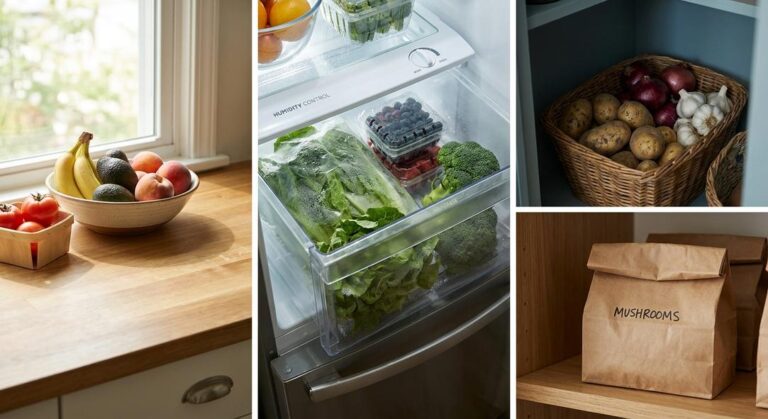
Fresh produce is essential, but fragile produce can be financially treacherous. A clamshell of raspberries may cost as much as a small paperback and expire with similar dramatic flair. On a tight budget, prioritize fruits and vegetables that last, stretch, and adapt.
- Carrots: cheap, crunchy, good raw or cooked
- Cabbage: long-lasting, excellent in slaws, stir-fries, soups, and tacos
- Potatoes: filling, versatile, and usually inexpensive
- Onions: the beginning of almost every good cheap meal
- Bananas: affordable and useful for breakfast or snacks
- Apples: longer-lasting than berries and often cheaper per serving
- Frozen vegetables: no chopping, no spoilage panic, no shame
Frozen vegetables deserve particular respect. They are picked and frozen quickly, often nutritionally comparable to fresh, and far less likely to become compost before Thursday. Add them to pasta, rice, soup, eggs, noodles, or quesadillas. They are the quiet civil servants of the budget kitchen.
If your store has markdown produce, inspect it carefully and use it quickly. Discount bananas can become oatmeal topping or freezer smoothie material. Soft tomatoes can become sauce. Limp greens can go into soup. The line between “bargain” and “science experiment” is thin, but with practice, visible.
Shop With Rules, but Not With Misery 🧠
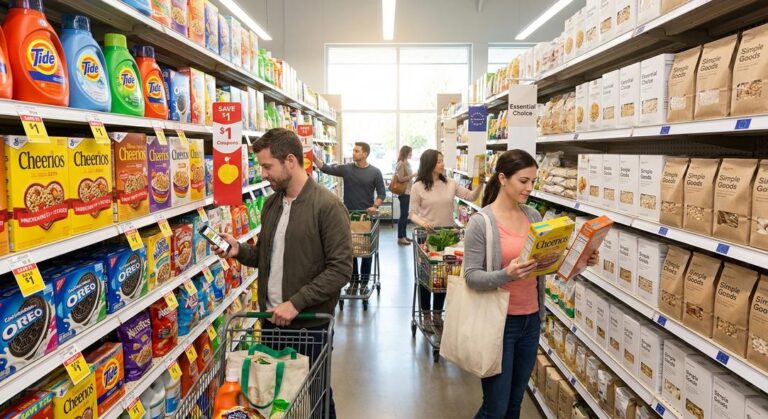
Rules help when willpower is tired. Grocery stores are designed to separate you from your money with lighting, music, end-cap displays, and the eternal promise that a new snack will repair your life. A few personal rules can keep the cart from becoming a confession.
- Make a list before entering the store.
- Check unit prices when comparing sizes.
- Buy store brands unless the name brand is genuinely better or cheaper on sale.
- Do not shop hungry if you can avoid it.
- Set aside $3 to $5 for flexibility, because prices and cravings both happen.
- Use pickup if impulse buying is your budget’s villain.
- Skip bulk purchases unless you are certain you will use them.
That last point matters. Bulk buying is often presented as the holy grail of frugality, but a 25-pound bag of flour is not a bargain if you bake twice a year and live with three roommates who use cabinet space as a political weapon. Buy in bulk only when the item is shelf-stable, frequently used, and cheaper per unit.
Also, be wary of sales that require buying five of something you barely wanted one of. The store is not giving you money; it is inviting you to convert cash into clutter.
Cook Once, Repurpose Twice 🔥
The $50 budget becomes much easier when you cook in components. Instead of preparing seven separate meals, make building blocks that can be recombined. A pot of rice, a tray of roasted potatoes, a batch of beans, and chopped cabbage can become several different meals with minimal additional effort.
For example, rice and beans can be dinner with salsa. The next day, add an egg and frozen vegetables for fried rice. Later, wrap the beans in tortillas with cabbage. If you cooked chicken, it can appear in a bowl, then soup, then a sandwich. Leftovers are not punishment; they are ingredients with a head start.
- Cook two cups of rice at once and refrigerate portions for quick meals.
- Roast potatoes, carrots, and onions together for breakfasts and bowls.
- Make a simple bean mixture with canned tomatoes, onion, and spices.
- Hard-boil eggs for snacks, salads, or fast breakfasts.
- Freeze extra portions before you get tired of them.
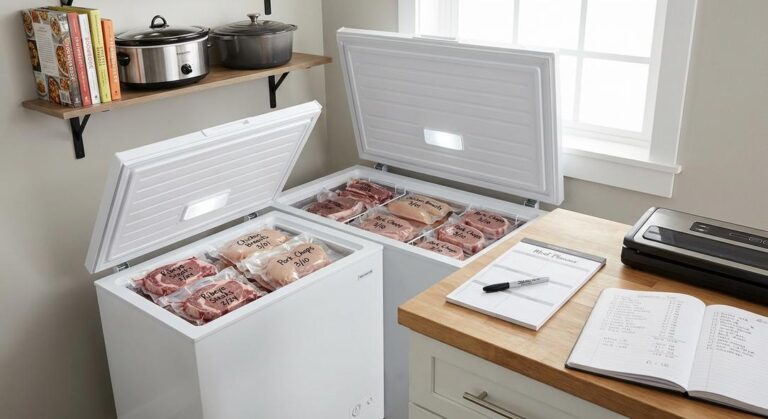
The freezer is especially useful for preventing “leftover fatigue,” a condition in which perfectly good food becomes emotionally unacceptable after its third appearance. Freeze one or two portions and reintroduce them later, when absence has restored their dignity.
Leave Room for Being Human 🍪
Any budget that assumes perfect behavior is fiction. You will forget to thaw something. You will have a hard day. You will want a snack that is not a carrot wearing hummus as a hat. Build humanity into the plan.
A small treat can make a budget more sustainable. That might be popcorn, chocolate, tea, a discount bakery item, or your favorite yogurt. The key is to choose deliberately. A planned treat is affordable pleasure. An unplanned emotional sprint through the snack aisle can cost as much as two dinners.
It is also wise to keep one emergency meal on hand. This should be something you can make in ten minutes when your original plan feels impossible. Pasta with sauce. Eggs and toast. Frozen dumplings bought on sale. Canned soup plus bread. The emergency meal is not glamorous, but it can save you from a delivery order that devours the budget in one majestic swoop.
Frugality that ignores appetite, fatigue, and pleasure is not discipline. It is a plan waiting to be abandoned.
A Simple One-Week Meal Map 🌿
Here is a realistic meal map using the kinds of groceries listed above. It is intentionally plain. The point is not to dazzle anyone. The point is to eat reliably, spend carefully, and avoid the 6 p.m. stare into the refrigerator that ends with takeout.
- Breakfasts: oatmeal with banana and peanut butter; eggs with potatoes; yogurt with fruit if included in the budget
- Lunches: rice and beans with salsa; pasta leftovers; tuna or egg sandwiches; soup made from leftovers
- Dinners: chicken, tofu, or bean bowls; vegetable fried rice; pasta with tomatoes and frozen vegetables; potato and egg hash; tacos with cabbage and beans
- Snacks: bananas, carrots, popcorn, boiled eggs, toast with peanut butter, or apples
If that sounds repetitive, good. Repetition reduces decision fatigue. The more choices you demand from a small budget, the harder that budget has to work. Restaurants understand this; they cross-use ingredients constantly. The same cabbage appears in slaw, tacos, bowls, and garnish. Your kitchen can do the same without printing a menu.
Seasoning is what keeps repetition from becoming bleak. Salsa, hot sauce, soy sauce, vinegar, mustard, curry powder, Italian seasoning, chili flakes, or lemon juice can shift the mood of a meal for pennies per serving. If staples are the bones of the budget, flavor is the nervous system.
When $50 Is Not Enough, Say So Without Shame 💬
It must be said plainly: for some people, $50 a week is not enough. Food prices differ dramatically by location. Dietary needs, disabilities, food allergies, transportation limits, cultural preferences, and kitchen access all affect what is possible. A person with celiac disease cannot simply buy the cheapest bread. A person without a car may not be able to chase sales across town. A person working two jobs may not have the time to cook dried beans from scratch like a Depression-era folk hero.
Budget advice should be useful, not smug. If you need food assistance, a pantry, community fridge, SNAP benefits, school meals, or help from family, that is not a personal failure. It is a rational response to an expensive food system and wages that often lag behind reality.
If $50 is too tight, use the framework anyway. Even at $65 or $80, the same principles can reduce waste and bring order to the week. The goal is not to win a frugality contest. The goal is to feed yourself with the resources you have.
The Bottom Line: Make the Budget Boring Enough to Work ✅
A successful $50 grocery budget is rarely dramatic. It is not a cascade of clever hacks or a week of gourmet miracles. It is oatmeal, eggs, rice, beans, potatoes, frozen vegetables, a little protein, a little sauce, and a plan that understands you are a person, not a spreadsheet.
The budget works when it becomes routine. Shop your kitchen. Build around staples. Choose durable produce. Use meat sparingly. Repeat meals. Keep an emergency dinner. Buy one small pleasure on purpose. Then do it again next week, adjusting for sales, appetite, and life’s little ambushes.
There is dignity in eating simply. There is intelligence in planning carefully. And there is real relief in opening the refrigerator on a Wednesday night and knowing that dinner, while not glamorous, is already halfway handled.
FAQ
Can one person really eat for $50 a week?
Yes, in many areas, but it depends on local prices, dietary needs, pantry supplies, and access to affordable stores. It is much easier if you already have basics like oil, salt, spices, and condiments. If $50 is unrealistic where you live, use the same structure with a higher number.
What should I stop buying first if I keep going over budget?
Start with drinks, individually packaged snacks, convenience meals, and expensive cuts of meat. These categories often consume a surprising share of the budget without covering many meals. Replace them gradually with water, homemade snacks, batch-cooked staples, eggs, beans, and cheaper proteins.
Is it cheaper to buy dried beans instead of canned beans?
Usually, yes. Dried beans tend to cost less per serving, especially if you cook a large batch. But canned beans are still affordable, fast, and practical. If canned beans help you avoid takeout or wasted ingredients, they are a perfectly sensible budget choice.
How do I avoid getting bored with cheap meals?
Change sauces, textures, and formats. The same beans can become tacos, rice bowls, soup, or a dip. The same vegetables can go into pasta, eggs, stir-fry, or wraps. A few flavor boosters like salsa, soy sauce, vinegar, hot sauce, and spice blends can make simple ingredients feel less repetitive.
Should I meal prep everything at once?
Only if that works for your schedule and temperament. Many people do better with partial prep: cook rice, chop vegetables, boil eggs, or make one batch of beans. Leave some flexibility so meals still feel fresh and you are not trapped eating the same container of food all week.