⚡ Key Takeaways
- ✅ The cheapest organic produce is usually seasonal, local, and bought with flexibility rather than a fixed shopping list.
- ✅ Farmers markets can be cheaper near closing time, especially if you buy seconds or bulk boxes.
- ✅ Frozen organic fruits and vegetables often beat fresh organic on price, waste, and convenience.
- ✅ Store brands, discount grocers, and warehouse clubs are often the best places for organic staples.
- ✅ CSAs and farm boxes can save money, but only if you actually cook what arrives.
- ✅ Prioritize organic for produce you eat often or items with higher pesticide concerns; buying everything organic is rarely necessary.
- ✅ The real secret is reducing waste: the cheapest organic tomato is the one you don’t let liquefy in the crisper drawer.
Organic produce has a reputation problem. It appears in grocery stores under soft lighting, often beside words like heirloom, artisan, and regenerative, all of which seem to add at least a dollar to the price of a cucumber. For many shoppers, the organic aisle feels less like a food section and more like a financial dare. 🥬
And yet the question is not whether organic fruits and vegetables can be expensive. They can. The better question is whether they must be. The answer, happily, is no. Buying organic produce cheaply is not about finding one magical store where avocados cost 49 cents and kale is handed out like confetti. It is about combining small tactics: buying seasonally, accepting imperfect produce, using frozen options, shopping the right channels, and being honest about what your household actually eats.
The cheapest way to buy organic produce is not one single method. It is a strategy. And like most good strategies, it begins by abandoning the fantasy that every meal must look like a magazine spread.
Start With the Unromantic Truth: Organic Is Not Always Worth the Same Premium 🌱
Before hunting for bargains, it helps to define the goal. If your aim is to reduce pesticide exposure, support farming practices that avoid synthetic pesticides and fertilizers, or simply buy produce that aligns with your values, organic can make sense. But buying every single fruit and vegetable organic, regardless of cost, is not always the smartest use of money.
Some produce tends to have thicker peels or lower pesticide residues. Bananas, onions, avocados, pineapples, and melons are commonly lower-priority organic purchases because the edible portion is protected by a peel or rind. Meanwhile, berries, leafy greens, apples, peaches, grapes, and peppers are often the items people prioritize when their organic budget is limited.
This is where thrift meets common sense. If your child eats strawberries by the pound, organic strawberries may deserve a place in the budget. If you buy one organic papaya every six months and forget it on the counter until it becomes a biology experiment, perhaps not.
The first rule of affordable organic shopping is not “buy everything organic.” It is “buy organic where it matters most to your household.”
A practical organic budget works best when it is selective. You are not failing at healthy eating if your onions are conventional. You are allocating resources like an adult with rent, utilities, and possibly a pet who eats better than you do.
Buy What Is in Season, Not What Your Recipe App Demands 🍓
The cheapest organic produce is usually the produce nature is producing in abundance at that moment. This may sound obvious, but the modern grocery store has trained us to believe that strawberries in January and butternut squash in July are equally normal propositions. They are not. One is a seasonal bargain; the other may have traveled farther than most people’s relatives at Thanksgiving.
Seasonality matters because supply affects price. When organic zucchini floods farms in midsummer, prices drop. When organic blueberries are in peak season, they become far more approachable. When you insist on asparagus in December, your wallet has every right to complain.
The cheapest organic shoppers tend to plan meals around what is available, not the other way around. Instead of beginning with “I need organic eggplant,” begin with “What organic vegetables are affordable this week, and what can I make from them?” It is a subtle shift, but it is the difference between shopping like a curator and shopping like a cook.
- In spring, look for organic greens, asparagus, peas, radishes, and strawberries.
- In summer, watch for organic tomatoes, zucchini, cucumbers, peppers, berries, stone fruit, and corn.
- In autumn, buy organic apples, pears, squash, sweet potatoes, broccoli, and Brussels sprouts.
- In winter, lean on organic carrots, cabbage, potatoes, onions, citrus, kale, and frozen produce.
Seasonal buying also rewards improvisation. A soup can absorb nearly any vegetable. A frittata is a polite name for leftovers held together with eggs. Roasted vegetables are the black dress of frugal cooking: simple, flexible, and hard to ruin. 🥕
Shop Farmers Markets Like a Regular, Not a Tourist 🧺
Farmers markets are often accused of being expensive, and sometimes the accusation is fair. There are markets where a bunch of carrots seems priced as though each carrot has received private tutoring. But farmers markets vary widely, and the cheapest deals often go to shoppers who understand the rhythm of the place.
First, go near closing time. Farmers do not enjoy packing unsold produce back into a truck. If you are polite, flexible, and not trying to haggle over a single tomato like a villain in a Dickens novel, you may find discounts on bulk purchases or perishable items.
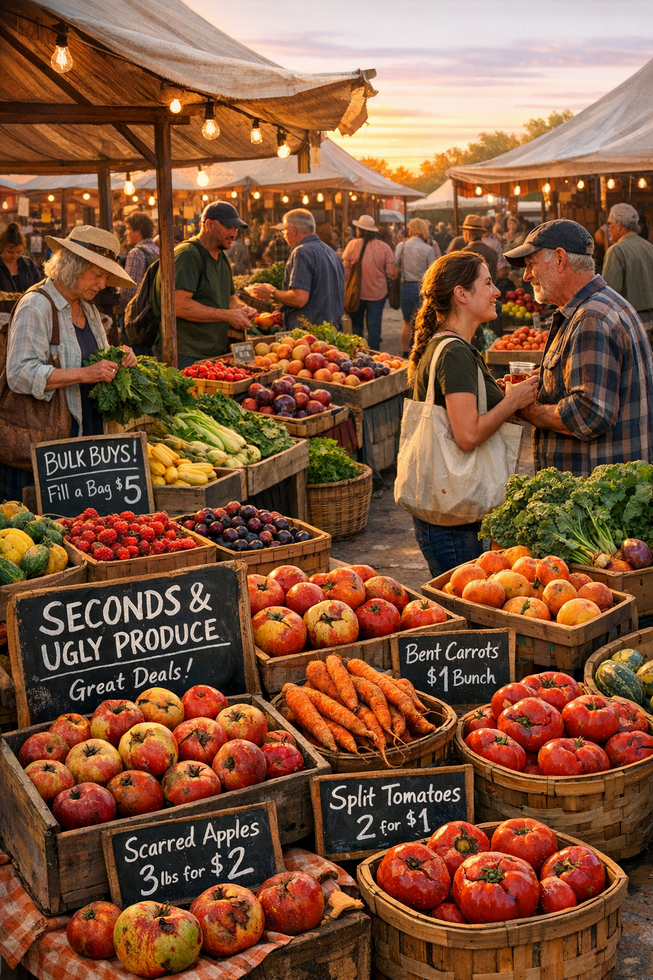
Second, ask for “seconds.” These are fruits and vegetables that are bruised, misshapen, small, oversized, or otherwise disqualified from the beauty pageant of retail produce. A scarred organic apple still makes applesauce. A split tomato is excellent for sauce. Bent carrots roast just as well as straight ones, despite what supermarket displays would have us believe.
Third, build relationships. If you buy regularly from the same farmer, you may hear about bulk boxes, end-of-day deals, or discounted produce that never makes it to the table. This is not networking in the corporate sense. It is simply being a decent repeat customer.
- Bring cash, especially small bills, to make quick purchases easier.
- Ask whether the farm is certified organic or uses organic practices without certification.
- Look for bulk boxes of tomatoes, apples, greens, or squash.
- Buy less glamorous items: cabbage, carrots, beets, turnips, and potatoes are often excellent values.
- Go with a flexible meal plan rather than a rigid list.
A note on certification: some small farms follow organic practices but are not officially certified because certification can be costly and administratively burdensome. This does not automatically mean the produce is inferior. It means you should ask questions. Farmers who are proud of their methods are usually happy to explain them.
Do Not Sleep on Frozen Organic Produce ❄️
If fresh organic berries are the luxury sedan of the produce aisle, frozen organic berries are the sensible hatchback: less glamorous, more reliable, and often the better financial decision. Frozen organic produce is frequently picked at peak ripeness and frozen quickly, preserving nutrients and flavor surprisingly well.
More importantly, frozen produce eliminates the most expensive feature of fresh produce: its ability to die dramatically in your refrigerator. Fresh spinach becomes slime. Herbs become hay. Berries grow tiny sweaters of mold. Frozen vegetables, by contrast, wait patiently until you need them.
For budget shoppers, frozen organic produce is especially useful for items that are expensive fresh or spoil quickly. Organic berries, spinach, peas, broccoli, green beans, corn, mango, and mixed vegetables often cost less per serving when frozen. They are ideal for smoothies, soups, stir-fries, pasta, omelets, casseroles, and grain bowls.
A bag of frozen organic spinach may not inspire poetry, but it will save dinner on a Wednesday night and ask nothing in return.
When comparing prices, look at cost per ounce or per pound, not the package price. A small clamshell of fresh organic raspberries may look manageable until you realize it costs more per pound than a respectable dinner. A large bag of frozen organic raspberries can be a far better deal, particularly if you use them in oatmeal or smoothies rather than as a centerpiece.
Use Store Brands, Discount Grocers, and Warehouse Clubs Wisely 🛒
The organic market has changed. Once upon a time, organic produce was mostly found in natural food stores with wooden crates and earnest chalkboards. Today, many mainstream supermarkets carry organic store brands, and those private labels can be significantly cheaper than national organic brands.
Discount grocers are often strong contenders for organic staples. Depending on where you live, stores such as Aldi, Lidl, Trader Joe’s, Costco, Sam’s Club, and regional chains may offer competitive prices on organic salad greens, carrots, apples, potatoes, bananas, berries, and frozen vegetables. The trick is to learn which stores are consistently cheap for which items.
Warehouse clubs can be excellent for households that truly consume large amounts of produce. Organic spinach, berries, apples, carrots, and frozen vegetables are often priced well in bulk. But warehouse shopping has a trap: buying five pounds of organic spring mix is only a bargain if you are not throwing away two pounds of green confetti at the end of the week.
- Track prices for five items you buy often, such as apples, spinach, carrots, berries, and potatoes.
- Compare unit prices across your usual stores for two or three weeks.
- Notice which stores are best for fresh, frozen, and bulk organic produce.
- Stop chasing every sale and build a realistic routine around the winners.
A small price notebook, a notes app, or even memory sharpened by mild grocery indignation will do. The point is not to turn shopping into accounting homework. It is to avoid assuming that the store with the prettiest produce display has the best prices.
Consider a CSA, But Read the Fine Print of Your Own Life 📦
Community Supported Agriculture, usually called a CSA, allows customers to buy a share of a farm’s harvest in advance or through a subscription. In return, they receive a box of produce weekly or biweekly. A CSA can be one of the cheapest ways to buy organic or organically grown produce, especially during peak season.
But a CSA is not automatically economical. It depends on price, quantity, variety, pickup convenience, and your willingness to cook whatever arrives. If your box contains kohlrabi, mustard greens, turnips, and a squash shaped like a medieval weapon, will you cook them? If yes, congratulations: you may be a CSA person. If not, the farm box may become an expensive compost subscription.
The best CSA customers are flexible cooks. They see unfamiliar vegetables as a puzzle rather than an insult. They make soups, slaws, pestos, pickles, sautés, and roasted sheet-pan dinners. They understand that greens can be frozen, herbs can become sauces, and almost anything can be tucked into a grain bowl with enough lemon and olive oil.
- Choose a half share if you are new to CSA boxes or have a small household.
- Ask whether the farm offers swaps or customizable boxes.
- Calculate the weekly cost and compare it with your normal organic produce spending.
- Check pickup times and locations before committing.
- Split a share with a friend or neighbor if the quantity is too large.
Some CSA programs also accept nutrition benefits or offer sliding-scale pricing. It is worth asking. Farms are businesses, yes, but many are also deeply invested in feeding their communities. 🚜
Buy Imperfect, Discounted, and “Use Soon” Produce Without Shame 🍅
One of the strangest things about modern food culture is that people will pay extra for rustic-looking bread but reject a slightly lopsided pepper. The produce world is full of edible misfits: crooked cucumbers, undersized apples, oversized carrots, spotted bananas, and tomatoes with harmless cracks. These are often discounted, and organic versions can be a bargain.
Many grocery stores have clearance produce racks. Some offer bags of ripe bananas, bruised apples, aging greens, or vegetables nearing their sell-by date. Online “imperfect produce” services may also provide discounts, though the economics vary by region and delivery fees. As always, compare the actual price per pound and be honest about whether you will use the food quickly.
Discounted produce is best when you have a plan. Soft organic peaches can become compote. Ripe bananas become muffins or smoothie packs. Wilted greens can be revived in cold water or cooked down into soups and sautés. Bruised apples can be peeled and simmered into sauce.
Frugality is not about lowering your standards. It is about knowing which standards matter. Flavor matters. Safety matters. A photogenic carrot does not.
The one caution: do not buy produce that is moldy, slimy, sour-smelling, or structurally suspicious. There is a difference between imperfect and decomposing. The former saves money. The latter starts a small ecosystem in your kitchen.
Grow the Expensive Little Things Yourself 🌿
Not everyone can grow a garden, and not everyone wants to. There is no moral virtue in pretending that a third-floor apartment with one north-facing window is a homestead. Still, even a modest container garden can reduce spending on certain organic items, especially herbs.
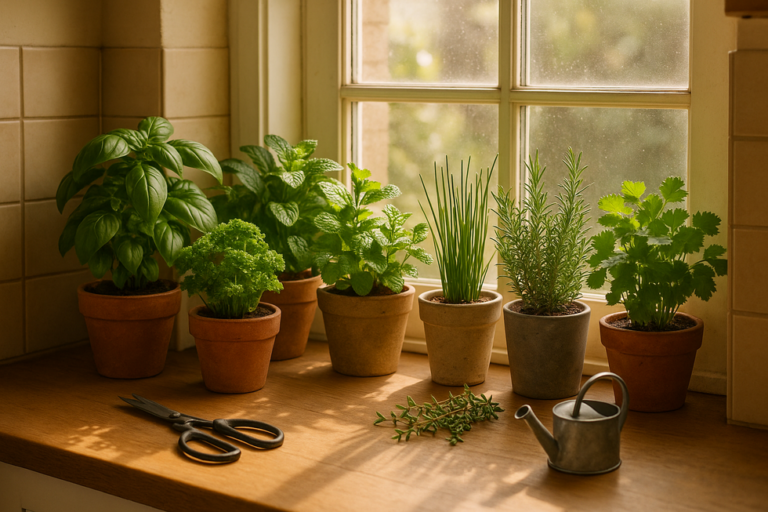
Fresh organic herbs are among the most overpriced items in the produce section. A small plastic packet of basil, parsley, mint, or cilantro can cost nearly as much as a plant. If you cook regularly, growing a few herbs in pots can pay off quickly. Basil, mint, parsley, chives, rosemary, and thyme are good candidates, depending on climate and light.
For those with more space, salad greens, cherry tomatoes, peppers, radishes, and green beans can be productive. But the cheapest garden is the one you can maintain. A neglected garden is not a savings plan; it is outdoor guilt with leaves.
- Start with herbs you already buy often.
- Choose containers if you rent or have limited space.
- Grow high-value crops rather than low-cost staples like onions or potatoes.
- Use compost where possible, but do not overspend on elaborate supplies.
- Preserve extras by freezing herbs in oil, drying them, or making pesto.
If gardening becomes a pleasure, wonderful. If it merely keeps you from buying another $3 packet of basil that turns black overnight, that is victory enough. 🌱
Reduce Waste: The Most Overlooked Organic Discount ♻️
There is a brutal little truth hiding in many grocery budgets: the most expensive produce is the produce you throw away. Organic food, because it often costs more, makes waste even more painful. A bargain box of organic greens is not a bargain if half of it collapses into damp sadness before Friday.
Reducing waste is not glamorous, but it is powerful. Store produce properly. Wash berries only when you are ready to eat them, or dry them thoroughly if you wash ahead. Wrap greens in a towel to absorb moisture. Keep herbs upright in a jar with a little water, or wrap them gently. Separate ethylene-producing fruits, such as apples and bananas, from delicate greens and vegetables that spoil faster near them.
Also, create a “use first” habit. Put fragile produce at eye level. Keep sturdier vegetables in the crisper. Once or twice a week, conduct a refrigerator audit. This need not be solemn. Open the drawer, face the evidence, and ask: “What is trying to become compost?”
- Use delicate greens, berries, herbs, and ripe fruit first.
- Save carrot tops, celery leaves, and herb stems for stocks or sauces if you enjoy that sort of thing.
- Freeze fruit before it over-ripens for smoothies or baking.
- Cook wilting vegetables into soup, stir-fry, omelets, or pasta sauce.
- Plan one weekly “clean-out” meal to use odds and ends.
A household that wastes less can afford better food without spending more. This is not kitchen moralizing; it is arithmetic.
The Cheapest Organic Shopping Strategy, Step by Step 🧠
If all these tactics feel like too much, simplify. The goal is not to become a professional produce economist. The goal is to eat well, spend less, and stop feeling ambushed by the organic section.
Here is a practical weekly approach that works for many households:
- Choose three to five organic items to prioritize based on what you eat most often.
- Check seasonal options first, especially at farmers markets or discount grocers.
- Buy frozen organic produce for berries, greens, peas, broccoli, and smoothie ingredients.
- Use store brands for staples such as carrots, apples, potatoes, spinach, and salad greens.
- Look for imperfect, discounted, or bulk produce when you have time to cook or preserve it.
- Skip organic when the price premium is extreme and the item is a lower priority.
- Store everything properly and plan meals around what will spoil first.
In practice, this might mean buying organic spinach, apples, and frozen berries every week; choosing conventional avocados and onions; grabbing seasonal organic carrots from a farmers market; and turning discounted organic tomatoes into sauce. It is not perfect. It is better than perfect: it is sustainable.
The cheapest way to buy organic produce is to be loyal to value, not to any one store, label, or idealized version of your future self.
That last part matters. Many of us shop for the person we wish we were: the one who makes beet salads, massages kale, and turns fennel fronds into something charming. But budgeting requires shopping for the person who will actually come home tired on Thursday. Buy organic produce that fits your real life, not your aspirational cookbook personality.
So, What Is the Cheapest Way? 🥦
The cheapest way to buy organic produce is to combine seasonal buying, frozen staples, store brands, imperfect produce, and selective priorities. If you have access to a good farmers market, shop late and ask for seconds. If you live near a discount grocer, learn its organic staples. If you have freezer space, use it aggressively. If you cook often and flexibly, consider a CSA. If you are short on time, frozen organic vegetables may be your most dependable ally.
Organic produce does not have to be an all-or-nothing lifestyle badge. It can be a practical part of a food budget. The trick is to stop treating the organic label as a commandment and start treating it as one factor among many: price, season, freshness, nutrition, taste, and likelihood of actual use.
In the end, the cheapest organic produce is not always the item with the lowest sticker price. It is the produce that nourishes you, fits your budget, gets eaten, and does not end its days in a plastic bag at the bottom of the refrigerator, remembered only when it has become liquid. That, surely, is a fate no carrot deserves. 🥕
FAQ
Is organic produce always healthier than conventional produce?
Not always in a simple, one-to-one way. Organic produce may reduce exposure to certain synthetic pesticides and can support different farming practices, but the most important step is eating enough fruits and vegetables overall. If your budget forces a choice, conventional produce is still far better than skipping produce entirely.
Which organic fruits and vegetables should I prioritize on a tight budget?
Prioritize organic versions of produce you eat frequently and items where pesticide concerns are commonly higher, such as berries, leafy greens, apples, peaches, grapes, peppers, and tomatoes. You can usually deprioritize thick-skinned items such as bananas, avocados, onions, pineapples, and melons.
Are frozen organic vegetables as nutritious as fresh?
Often, yes. Frozen vegetables and fruits are usually picked at peak ripeness and frozen quickly, which helps preserve nutrients. They are also less likely to be wasted, making them one of the best budget choices for organic eating.
Are farmers markets cheaper for organic produce?
They can be, especially if you shop near closing time, buy in bulk, choose seasonal items, or ask for imperfect produce. However, prices vary widely by region and market. Compare unit prices with your grocery store before assuming either option is cheaper.
Is a CSA worth it for saving money on organic produce?
A CSA can save money if you cook often, enjoy variety, and use nearly everything in the box. It may not save money if you dislike unfamiliar vegetables, travel frequently, or let produce spoil. Beginners should consider a half share or split a box with a friend.
About the Author