⚡ Key Takeaways
- ✅ The cheapest healthy family meals are usually built around beans, lentils, eggs, oats, rice, pasta, potatoes, frozen vegetables, and seasonal produce.
- ✅ A nutritious dinner for four can often be cooked for roughly $5 to $10, especially when meat is used sparingly or replaced with legumes.
- ✅ The best budget meals are not “diet food” but sensible, filling dishes: soups, stews, curries, chili, baked potatoes, frittatas, and stir-fries.
- ✅ Frozen and canned ingredients are not second-rate; they are often affordable, nutritious, and less wasteful than fresh produce.
- ✅ Planning around what you already have prevents the most expensive meal of all: the one that spoils in the fridge.
- ✅ Batch cooking, leftovers, and “planned reruns” can turn one cheap dinner into lunches or another meal later in the week.
- ✅ The real secret is not a single recipe but a formula: cheap staple + protein + vegetables + flavor.
There is a particular sort of panic that arrives around 5:37 p.m., when everyone is hungry, the kitchen looks accusingly bare, and the idea of ordering takeout begins to glow like a moral loophole. Feeding a family of four well on a tight budget is not simply a cooking challenge. It is logistics, economics, nutrition, diplomacy, and occasionally hostage negotiation with a toddler who has decided that green foods are suspicious. 🍲
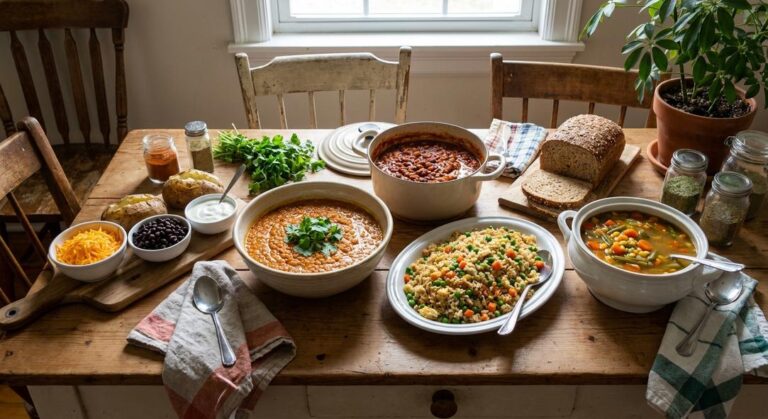
The good news is that the cheapest healthy meals are not grim bowls of boiled virtue. They are often the foods humans have cooked for centuries when money was short but appetites were not: beans simmered with spices, rice stretched with vegetables, eggs turned into dinner, potatoes made noble, soups thick enough to stand a spoon in, and leftovers reborn with a little heat and imagination.
Healthy, in this context, does not mean expensive powders, tiny plastic tubs of pre-cut fruit, or anything described as “artisanal” by someone wearing linen. It means meals with enough protein, fiber, vegetables, and energy to keep a household functioning without requiring a second mortgage. Below are the cheapest healthy meals worth cooking for a family of four, along with the principles that make them work.
The Budget Kitchen Formula That Actually Works 🧅
Before we get to specific meals, it helps to understand the formula behind nearly every cheap, healthy dinner. Think of it as culinary arithmetic, but tastier and with fewer childhood traumas.
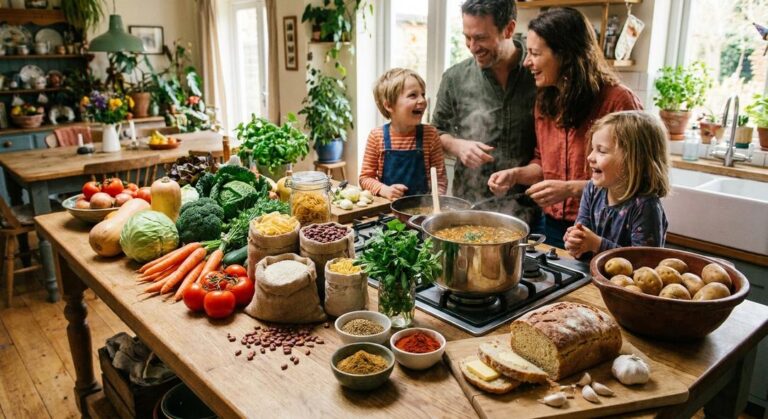
A good low-cost meal usually contains four parts: a cheap base, an affordable protein, vegetables, and flavor. The base fills plates and provides energy. The protein keeps people full. The vegetables add fiber, vitamins, color, and respectability. Flavor is what stops everyone from quietly resenting you.
- Cheap bases: rice, oats, pasta, potatoes, corn tortillas, barley, couscous, and whole-wheat bread.
- Affordable proteins: dried or canned beans, lentils, eggs, canned tuna, peanut butter, tofu, plain yogurt, chicken thighs, and ground turkey bought on sale.
- Budget vegetables: carrots, cabbage, onions, frozen peas, frozen spinach, canned tomatoes, sweet potatoes, seasonal greens, and broccoli when discounted.
- Flavor builders: garlic, onions, curry powder, cumin, chili flakes, soy sauce, vinegar, mustard, lemon juice, herbs, and stock cubes.
The cheapest healthy meals are rarely the ones with the shortest ingredient lists. They are the ones built from humble ingredients that can be used in five different ways before Friday.
This is why a bag of lentils is more powerful than it looks. It can become soup, curry, taco filling, pasta sauce, or shepherd’s pie topping. A cabbage can be slaw, stir-fry, soup filler, taco crunch, or fried rice companion. These are not ingredients; they are small edible insurance policies. 🥬
Lentil Soup: The Quiet Champion of Cheap Dinners 🍵
If there were a Nobel Prize for economical cooking, lentil soup would give a modest speech and thank onions, carrots, and garlic. Lentils cook faster than dried beans, do not require soaking, and deliver protein, iron, fiber, and serious staying power for very little money.
For a family of four, a pot of lentil soup can cost roughly $5 to $8 depending on where you shop and what you already have in the pantry. Use dried lentils, canned tomatoes, onion, carrots, celery if available, garlic, and broth or water with bouillon. Add cumin, paprika, curry powder, or Italian herbs. Serve with toast, rice, or a simple baked potato if appetites are large.
The method is forgiving. Sauté chopped onion and carrots, add garlic and spices, stir in lentils and tomatoes, cover with water or stock, and simmer until soft. Finish with a splash of vinegar or lemon juice. That final acidic note is not fancy chef theater; it wakes the whole pot up.
- Use red lentils for a creamy soup that cooks quickly.
- Use brown or green lentils for a chunkier, more stew-like texture.
- Add frozen spinach near the end for extra nutrients.
- Stretch leftovers with cooked rice or pasta the next day.
Lentil soup also has the rare virtue of tasting better after a night in the fridge, which is more than can be said for many human decisions made after 9 p.m.
Bean Chili: Big Flavor, Small Bill 🌶️
Chili is one of the great democratic meals: it welcomes nearly everything and judges almost nothing. Beans, tomatoes, onions, spices, corn, peppers, sweet potatoes, leftover meat, or no meat at all—it all works. For families trying to eat healthily without overspending, bean chili is a weeknight workhorse.
A meatless chili made with canned or dried beans, canned tomatoes, onion, chili powder, cumin, and frozen corn can feed four generously for about $6 to $9. If your household is not ready to give up meat entirely, use a small amount of ground beef or turkey as a flavoring rather than the main event. Half a pound of meat plus two cans of beans still tastes hearty, but costs far less than a meat-heavy dish.
Serve it over rice, with baked potatoes, or with cornbread if you have the ingredients. Top with plain yogurt instead of sour cream, a little shredded cheese, or chopped onions. The toppings are optional, but they do help convince skeptical diners that budget food has not been sent to punish them. 🫘
- Sauté onion and garlic in a little oil.
- Add chili powder, cumin, and a pinch of salt.
- Stir in beans, canned tomatoes, and corn.
- Simmer for 20 to 30 minutes until thick.
- Serve with rice, potatoes, or tortillas.
The nutritional case is strong: beans provide fiber and plant protein, tomatoes bring vitamins and antioxidants, and spices make the whole dish feel abundant. Also, chili freezes beautifully, which makes future-you feel mysteriously wealthy.
Egg-Based Dinners: Frittatas, Scrambles, and Breakfast-for-Dinner 🍳
Eggs have had a turbulent public-relations career, but in the budget kitchen they remain indispensable. They are quick, versatile, and rich in high-quality protein. When paired with vegetables and a cheap carbohydrate, they make a very respectable family dinner.
A vegetable frittata is essentially a crustless quiche that did not go to private school. Use eggs, leftover cooked vegetables, frozen spinach, onions, potatoes, or bits of cheese. A dozen eggs can often feed four when stretched with potatoes or vegetables, and the whole meal may land around $5 to $8.
Try a potato and onion frittata with a side of cabbage slaw, or scrambled eggs with black beans and tortillas, or fried rice with eggs and frozen peas. Breakfast-for-dinner is not a failure of meal planning. It is a longstanding economic strategy with better branding.
- Egg fried rice: rice, eggs, frozen peas and carrots, soy sauce, and onion.
- Bean and egg tacos: scrambled eggs, black beans, cabbage, and salsa in tortillas.
- Vegetable frittata: eggs, potatoes, spinach, onion, and a little cheese.
- Shakshuka-style eggs: eggs poached in spiced tomato sauce, served with bread.
A cheap meal becomes a healthy meal when it keeps people full, includes real nutrients, and does not depend on ultra-processed shortcuts to do all the work.
The trick is to avoid making eggs stand alone. Add vegetables, beans, or whole grains, and suddenly a simple scramble becomes dinner with a college degree. 🥚
Rice and Beans: The Global Classic That Never Needed Rebranding 🍚
Rice and beans appear in cuisines around the world for a reason: together they are cheap, filling, nutritious, and endlessly adaptable. Black beans and rice, red beans and rice, chickpea pilaf, pigeon peas and rice, lentils with rice, rice bowls with beans and vegetables—the theme is universal because it works.
For a family of four, rice and beans can cost as little as $4 to $7, particularly if you use dried beans. Canned beans are still economical and save time. Add onions, garlic, spices, and whatever vegetables are available. A little lime juice, vinegar, hot sauce, or chopped herbs at the end makes the dish feel brighter.
The health value improves when you use brown rice some of the time, mix in vegetables, and keep sodium under control if using canned beans. Rinsing canned beans reduces some of the salt and improves their flavor. If using white rice, do not panic. Dinner does not need to win a wellness pageant; it needs to nourish people reliably.
- Mexican-inspired: black beans, rice, corn, salsa, cabbage, and cumin.
- Caribbean-inspired: kidney beans, rice, thyme, garlic, onion, and a pinch of allspice.
- Mediterranean-inspired: chickpeas, rice, tomatoes, spinach, oregano, and lemon.
- Indian-inspired: lentils, rice, curry powder, onion, and frozen peas.
One pot of rice and beans can also become burritos, bowls, stuffed peppers, or soup the next day. In the economy of the home kitchen, versatility is as valuable as money. 🌍
Pasta Without the Guilt Trip 🍝
Pasta is often treated as a nutritional villain, which is unfair. The problem is rarely pasta itself; it is the mountain of cream sauce, the absence of vegetables, and portion sizes large enough to have zoning implications. Used wisely, pasta is one of the cheapest family dinner foundations.
A healthy budget pasta might include whole-wheat pasta or regular pasta, canned tomatoes, lentils, chickpeas, frozen spinach, tuna, or vegetables. A lentil tomato sauce is particularly useful because it mimics the heartiness of meat sauce at a fraction of the cost. Cook red lentils directly into crushed tomatoes with garlic, onion, and Italian herbs, then toss with pasta.
Another excellent option is tuna and white bean pasta: canned tuna, cannellini beans, pasta, garlic, lemon, and frozen peas. It is fast, protein-rich, and cheaper than most fish dinners. Cabbage pasta, a dish beloved in various forms across Eastern Europe and beyond, is also wonderfully affordable: sauté cabbage and onions until sweet, toss with noodles, season generously, and add a little egg or beans for protein.
- Choose pasta as the base, not the whole meal.
- Add at least one protein: lentils, beans, tuna, eggs, or leftover chicken.
- Add vegetables: spinach, peas, cabbage, broccoli, tomatoes, or zucchini.
- Use strong flavors: garlic, chili flakes, lemon, herbs, or a small amount of cheese.
The goal is not to make pasta virtuous enough for a lifestyle magazine. The goal is to make it balanced enough that everyone is full and nobody is rummaging for cereal an hour later. 🧄
Baked Potatoes and Sweet Potatoes: The Cheapest Blank Canvas 🥔
Potatoes may be the most misunderstood bargain in the produce aisle. They are inexpensive, filling, rich in potassium and vitamin C, and unfairly blamed for what we tend to put on them. A potato itself is not the problem. A potato drowned in processed cheese sauce and eaten beside no vegetable in sight is where things begin to wobble.
A baked potato bar is one of the easiest cheap healthy meals for a family of four. Bake large potatoes or sweet potatoes, then top them with bean chili, broccoli, plain yogurt, salsa, lentils, tuna, cottage cheese, or leftover vegetables. The potatoes provide comfort and bulk; the toppings provide protein and nutrients.
This meal is especially good for families with mixed preferences. One child can have beans and cheese, another can have yogurt and broccoli, and an adult can add hot sauce with the quiet intensity of someone reclaiming a little autonomy. 🌱
- Chili potatoes: baked potatoes topped with bean chili and yogurt.
- Broccoli potatoes: potatoes with steamed frozen broccoli and a small amount of cheese.
- Tuna potatoes: potatoes topped with tuna, yogurt, mustard, and chopped pickles.
- Sweet potato bowls: sweet potatoes with black beans, corn, salsa, and cabbage.
The cost can be impressively low, especially when potatoes are bought in larger bags. Add a simple side salad or slaw, and dinner is done without much fuss or financial drama.
Oats Are Not Just for Breakfast 🥣
Oats deserve a place in any serious discussion of cheap healthy meals. They are rich in soluble fiber, inexpensive, filling, and fast. Yes, oatmeal is the obvious use, but oats can do more than sit politely under sliced bananas.
For breakfast or dinner on a difficult night, oatmeal with peanut butter, fruit, and milk can be a perfectly respectable meal. Savory oats are another option: cook oats with broth, stir in spinach, top with an egg, and season with pepper, soy sauce, or hot sauce. It may sound eccentric until you remember that risotto is basically rice asking for applause.
Oats can also stretch meatballs, veggie burgers, and lentil loaves. Mixed with mashed beans, grated carrot, onion, egg, and seasoning, they help create cheap patties that can be pan-fried and served with potatoes or salad.
A pantry staple is truly valuable when it can serve breakfast, lunch, and dinner without requiring a costume change.
For families trying to reduce grocery costs, oats are a quiet powerhouse. They do not shout. They just keep everyone full until lunch, which is a form of domestic heroism. 🍌
Frozen and Canned Foods: The Budget Cook’s Allies 🧊
There is a persistent myth that healthy cooking must begin with a market basket of fresh produce glowing in natural light. Lovely, yes. Affordable and practical every week? Not always. Frozen and canned foods are among the best tools for feeding a family well on a budget.
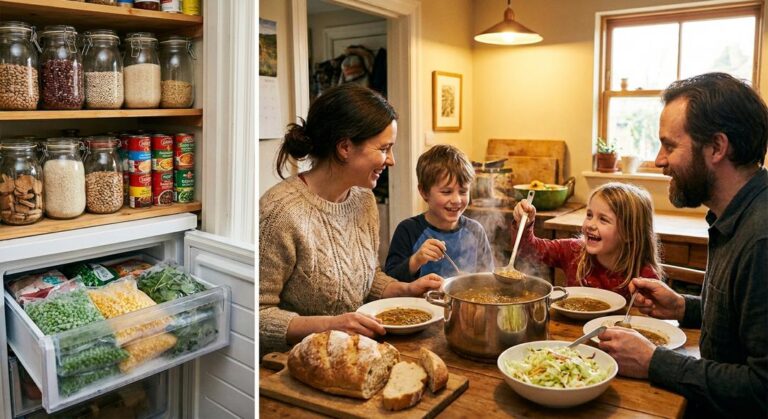
Frozen vegetables are usually picked and frozen at peak ripeness, often retaining excellent nutritional value. They are pre-washed, pre-chopped, and do not turn into expensive compost in the crisper drawer. Frozen spinach, peas, broccoli, corn, mixed vegetables, and berries can upgrade meals quickly.
Canned tomatoes, beans, tuna, sardines, pumpkin, corn, and lentils are similarly useful. Choose low-sodium versions when possible, and rinse canned beans. Store brands are often just as good as name brands, though less emotionally needy.
- Add frozen spinach to soup, pasta sauce, eggs, and curry.
- Use frozen peas in fried rice, pasta, stews, and savory oats.
- Keep canned tomatoes for chili, lentil sauce, shakshuka, and soups.
- Use canned beans for tacos, salads, soups, rice bowls, and baked potatoes.
The healthiest ingredient is not always the freshest one. Sometimes it is the one you can afford, store, and actually use before it stages a quiet biological protest in the back of the fridge. 🥫
A Sample Week of Cheap Healthy Family Meals 📅
A plan does not need to be elaborate. In fact, the more elaborate the plan, the more likely it is to collapse by Wednesday under the weight of its own optimism. A useful meal plan repeats ingredients in different forms, uses leftovers deliberately, and leaves room for real life.
Here is a simple week of inexpensive dinners for four. Prices vary by region, but these meals are designed around low-cost staples and flexible ingredients.
- Monday: Lentil soup with toast or rice.
- Tuesday: Bean chili served over baked potatoes.
- Wednesday: Egg fried rice with frozen peas and carrots.
- Thursday: Pasta with lentil tomato sauce and frozen spinach.
- Friday: Black bean tacos with cabbage slaw and salsa.
- Saturday: Vegetable frittata with roasted potatoes.
- Sunday: Chickpea curry with rice and frozen vegetables.
Notice the repetition: lentils, beans, rice, potatoes, eggs, frozen vegetables, cabbage, and canned tomatoes. This is not monotony; it is strategy. The same affordable ingredients are reassembled so they do not feel like the same meal wearing a false mustache. 🌮
If time is tight, cook a large pot of rice, a batch of beans or lentils, and a tray of potatoes at the beginning of the week. Even one hour of preparation can make weeknight dinners much less chaotic.
How to Keep Meals Cheap Without Making Them Miserable 💡
The line between frugal and joyless is thinner than a supermarket receipt. Healthy budget cooking works best when it includes pleasure. A squeeze of lemon, a spoonful of salsa, toasted spices, crispy onions, a little cheese, fresh herbs if affordable—these details matter. They turn “we are saving money” into “this is actually good.”
One of the smartest habits is to buy fewer highly specific ingredients. A sauce used for one recipe and then abandoned is not a bargain, no matter how inspiring it seemed in the aisle. Instead, build a small flavor pantry that works across cuisines: soy sauce, vinegar, mustard, cumin, chili powder, curry powder, garlic powder, Italian herbs, and hot sauce.
- Plan meals around ingredients you already own before shopping.
- Use meat as a seasoning rather than the centerpiece.
- Cook double portions of soups, stews, chili, and rice.
- Buy store brands for basics such as oats, rice, beans, pasta, and frozen vegetables.
- Compare unit prices, not package prices.
- Keep a “use first” shelf in the fridge for food that needs attention.
Food waste is the hidden tax on family groceries. The cheapest healthy meal may be the one made from the half onion, leftover rice, wilting spinach, and two eggs that would otherwise be forgotten until they became archaeology.
The most economical cooks are not necessarily the strictest. They are the most observant: they notice what is already in the kitchen and build from there.
That observation is what separates a stressful grocery budget from a manageable one. You do not need perfection. You need a few repeatable meals, a flexible pantry, and enough seasoning to keep morale intact. 🛒
The Bottom Line: Cheap, Healthy, and Entirely Possible ✅
The cheapest healthy meals for a family of four are not exotic. They are the sturdy classics: lentil soup, bean chili, rice and beans, egg fried rice, vegetable frittatas, baked potatoes with toppings, pasta with lentil sauce, chickpea curry, savory oats, and black bean tacos. They are affordable because they rely on staples. They are healthy because they include fiber, protein, and vegetables. They are practical because they forgive substitutions, leftovers, and imperfect evenings.
Perhaps the most reassuring truth is this: feeding a family well does not require culinary brilliance every night. It requires a rotation of dependable meals and the courage to serve beans more often than advertising executives would prefer. A good dinner does not need to be photogenic. It needs to be nourishing, affordable, and eaten before everyone becomes dramatic.
So keep lentils in the cupboard, eggs in the fridge, frozen vegetables in the freezer, and potatoes somewhere cool and dark. With those humble supplies, you are never far from dinner. And in a world where groceries seem to get more expensive every time you blink, that is no small comfort. 🍽️
FAQ
What is the cheapest healthy dinner for a family of four?
One of the cheapest is lentil soup with rice or bread. It is filling, nutritious, and usually costs only a few dollars to make if you use dried lentils, carrots, onions, and basic seasonings.
Is it cheaper to cook with dried beans or canned beans?
Dried beans are usually cheaper per serving, but canned beans are still affordable and much faster. If time is tight, canned beans can prevent takeout, which makes them a smart budget choice.
Can cheap meals still provide enough protein?
Yes. Beans, lentils, eggs, peanut butter, tofu, yogurt, canned tuna, and budget cuts of chicken can all provide protein without a high cost. Combining legumes with grains, such as rice and beans, also creates a very filling meal.
Are frozen vegetables as healthy as fresh vegetables?
Often, yes. Frozen vegetables are usually picked at peak ripeness and frozen quickly. They are affordable, convenient, and reduce waste, making them excellent for budget family cooking.
How can I make budget meals taste better?
Use flavor boosters such as garlic, onions, spices, vinegar, lemon juice, soy sauce, mustard, herbs, salsa, or hot sauce. Even inexpensive ingredients can taste excellent when properly seasoned.