⚡ Key Takeaways
- ✅ Homemade black coffee typically costs about $0.35 to $1.25 per serving, depending mostly on bean quality and portion size.
- ✅ Store-bought drip coffee usually runs $2.00 to $4.50 per cup before tip, tax, or add-ons.
- ✅ A café latte commonly costs $4.50 to $7.50, while a homemade latte often lands between $1.00 and $2.25.
- ✅ Equipment changes the math: a basic brewer barely moves the needle, while a premium espresso machine can add real cost per cup.
- ✅ Milk, flavored syrups, capsules, filters, and wasted coffee are the sneaky line items people forget.
- ✅ If you buy one café coffee every workday, switching to homemade can save roughly $500 to $1,500 per year.
- ✅ The cheapest cup is not always the best value; convenience, pleasure, ritual, and leaving the house like a civilized mammal count too.
Coffee is one of those small purchases that behaves like a financial raccoon: harmless-looking, charming, and somehow in your kitchen at 6 a.m. stealing from the budget. ☕
Ask someone what coffee costs, and you will usually hear one of two answers. The home brewer says, with a faint air of moral victory, “Pennies.” The café loyalist says, with a shrug and a paper cup in hand, “Four bucks, maybe five.” Both are sort of right. Both are also hiding the bodies: the grinder, the oat milk, the forgotten half-bag of beans going stale, the tip screen, the compostable pod, the espresso machine purchased during a particularly ambitious January.
So what is the actual cost per serving of homemade versus store-bought coffee? Not the fantasy number. Not the number your most frugal friend quotes while polishing a French press. The real one: ingredients, equipment, waste, and the cost of buying a tiny moment of public luxury from someone who knows how to steam milk without screaming.
The quick answer: homemade wins, but not by magic ☕
In most cases, homemade coffee is dramatically cheaper than store-bought coffee. A simple mug of home-brewed drip coffee generally costs between $0.35 and $1.25. A comparable cup from a coffee shop usually costs between $2.00 and $4.50. If you are comparing lattes, the gap remains wide: a homemade latte often costs $1.00 to $2.25, while a café latte tends to fall between $4.50 and $7.50.
The exact number depends on five big variables: the beans, the brew method, the serving size, the add-ins, and the equipment. Coffee math can look precise, but only if we admit that “a cup” is an unstable unit. In one household, it means six ounces. In another, it means a 20-ounce travel mug filled with the urgency of late capitalism. 📊
The cheapest coffee is usually the one you make at home and actually drink. The most expensive is the one you buy daily without noticing, or brew at home and pour down the sink.
To make a fair comparison, let’s use realistic assumptions rather than heroic ones. We will look at a standard 10-to-12-ounce serving of brewed coffee and a typical milk-based espresso drink. We will also include equipment over time, because your coffee maker is not a houseplant. It exists, it costs money, and one day it will betray you.
The homemade coffee equation 🏡
Homemade coffee looks simple: beans plus water. But the true per-serving cost includes several small pieces. The beans are the headline, but the supporting cast matters.
- Coffee beans or grounds: usually the largest cost.
- Filters or pods: negligible for some methods, significant for capsules.
- Water and electricity: tiny, but not zero.
- Milk, cream, sugar, or syrups: small daily amounts that add up.
- Equipment: brewer, grinder, kettle, espresso machine, replacement parts.
- Waste: stale beans, over-brewing, abandoned half-mugs, experimental disasters.
Let’s start with beans. A one-pound bag of coffee contains 454 grams. For a decent 10-to-12-ounce serving, many people use about 18 to 22 grams of coffee. That means one pound yields roughly 20 to 25 servings.
If your coffee costs $10 per pound, your beans cost around $0.40 to $0.50 per serving. If your coffee costs $16 per pound, which is common for better supermarket or local roaster beans, you are looking at roughly $0.65 to $0.80 per serving. If you are drinking exquisite single-origin beans roasted by someone named Milo who speaks reverently about altitude, your $24 bag may cost $1.00 to $1.20 per serving before anything else enters the mug. 🌱
Then come the small extras. A paper filter might cost two to five cents. Electricity and water often land under three cents per serving. A splash of half-and-half might add 10 to 25 cents. Oat milk may add 20 to 45 cents, depending on generosity and brand loyalty. Sugar is close to invisible financially, though not nutritionally.
For a straightforward homemade black coffee, the practical range often looks like this:
- Budget home brew: $0.25 to $0.45 per serving.
- Good everyday beans: $0.55 to $0.90 per serving.
- Specialty beans: $0.90 to $1.40 per serving.
- With milk or cream: add about $0.10 to $0.50.
So yes, homemade coffee can be cheap. But it is rarely the three-cent miracle sometimes claimed by people who have not updated their grocery assumptions since 1998.
Equipment: the cost hiding on the counter ⚙️
Equipment is where coffee budgets become philosophical. A $25 drip machine and a $700 espresso machine do not produce the same cost per serving, even if the beans are identical. One is a tool; the other is a countertop declaration of intent.
The fairest way to calculate equipment is to spread the cost over its useful life. Suppose you buy a $60 drip brewer and use it five days a week for four years. That is about 1,040 servings. The machine adds roughly six cents per cup. Even if you replace it sooner, the equipment cost remains modest.
A grinder changes the equation slightly. A basic burr grinder for $100 used over five years at one cup per day adds about five to six cents per serving. A nicer grinder at $250 may add about 14 cents per serving under the same assumptions. Still manageable, especially if you care about flavor.
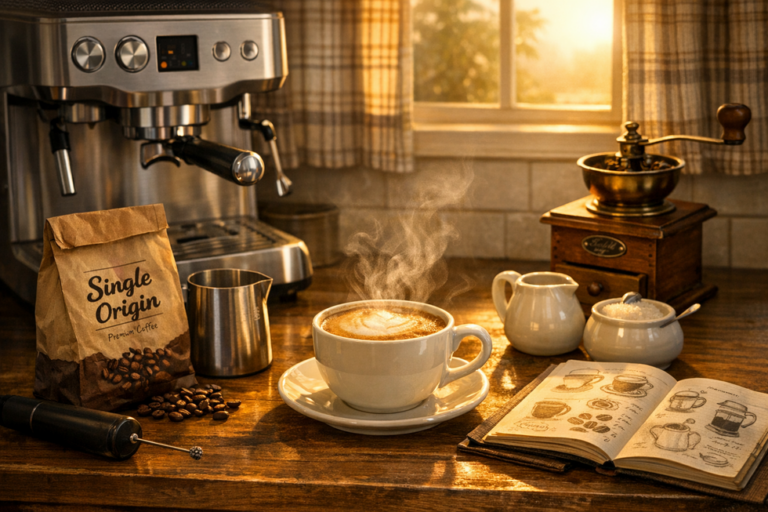
Espresso machines are the drama. A $150 entry-level machine used daily for three years adds about 14 cents per drink. A $700 machine used daily for five years adds about 38 cents per drink. A $2,000 machine used by a household of two every day for seven years can still be reasonable per serving, but only if it is actually used. If it becomes a chrome-plated monument to unrealized ambition, the cost per cup approaches absurdity. 😬
Equipment is cheap when it becomes a habit and expensive when it becomes a hobby you abandon after two weekends and one confusing descaling cycle.
For most home brewers, equipment adds somewhere between $0.05 and $0.40 per serving. For capsule systems, the machine may be inexpensive, but the capsules often shift the real cost back into the daily serving.
Capsules, pods, and convenience coffee 📦
Single-serve coffee deserves its own little courtroom. It is homemade, yes, but it borrows some economics from the coffee shop: convenience at a premium.
A standard coffee pod might cost between $0.40 and $0.90. Premium pods can exceed $1.00 to $1.25. Espresso-style capsules often sit in the $0.70 to $1.50 range before milk. Add a splash of cream or steamed milk, and the drink can easily reach $1.00 to $2.00.
That is still usually cheaper than buying coffee out. But it is not as cheap as brewing from whole beans or ground coffee. The packaging, portioning, and convenience are built into the price. You are paying for not measuring, not grinding, not cleaning much, and not making decisions before your soul has fully returned to your body.
Capsules may be worth it if they prevent café purchases. If a $1.10 pod keeps you from buying a $5.50 latte, the pod is financially heroic. If it replaces a $0.55 home brew you already liked, it is simply a pricier habit wearing a tidy little hat. 🎩
What store-bought coffee really costs 🏙️
At the coffee shop, the number on the menu is only the opening bid. Tax may appear. Tip prompts may glow at you with the moral intensity of a courtroom witness. Alternative milk may add $0.70. Extra espresso may add $1.00. A seasonal syrup may add another charge, and suddenly your harmless latte costs the same as a modest lunch in 2009.
Typical store-bought coffee prices in many U.S. cities look roughly like this:
- Small drip coffee: $2.00 to $3.25.
- Large drip coffee: $3.00 to $4.50.
- Cold brew: $3.75 to $5.75.
- Americano: $3.00 to $5.00.
- Latte or cappuccino: $4.50 to $7.50.
- Flavored or seasonal drink: $5.50 to $8.50 or more.
Independent cafés are not necessarily overcharging. They are paying for rent, labor, insurance, equipment, training, waste, merchant fees, utilities, and the increasingly expensive miracle of existing in a commercial space. When you buy coffee out, you are not only buying coffee. You are renting a tiny share of a skilled operation for three minutes. Sometimes that is worth every penny. ✨
Still, on a per-serving basis, the gap is stark. A $3.50 drip coffee could be six times the price of a good home-brewed version. A $6.25 latte may be three to five times the price of making something similar at home. The savings become especially obvious when the habit is daily rather than occasional.
A realistic side-by-side cost comparison ⚖️
Let’s put the numbers into ordinary human terms. Imagine you drink one coffee per weekday, or about 260 servings per year. Here are plausible annual costs:
- Homemade budget drip at $0.40: about $104 per year.
- Homemade quality drip at $0.85: about $221 per year.
- Homemade specialty coffee at $1.30: about $338 per year.
- Store-bought drip at $3.25: about $845 per year.
- Store-bought latte at $5.75: about $1,495 per year.
If you drink coffee seven days a week, the annual difference grows. A daily $5.75 latte costs nearly $2,100 per year. A homemade version at $1.75 costs about $640 per year. That is a difference of roughly $1,460, which is not “skip lattes and become a millionaire” money, but it is very much “pay for a flight, reduce a bill, or buy a suspiciously nice chair” money. 🪑
The comparison becomes even more interesting for households. If two people each buy one café drink on workdays, the annual café bill can easily exceed $2,000 to $3,000. Making most of that coffee at home can free up a meaningful amount without requiring anyone to start washing aluminum foil or pretending lentils are a personality.
The latte test: can homemade compete? 🥛
Black coffee is the easy win for home brewing. Lattes are trickier because cafés have commercial grinders, trained baristas, and milk texture that does not resemble a bubble bath. But the cost math still favors home.
A homemade latte usually includes espresso or strong coffee plus milk. The coffee portion might cost $0.50 to $1.25, depending on beans and dose. Milk may add $0.30 to $0.80. Syrup, if used, may add $0.10 to $0.40. Equipment can add another $0.15 to $0.50 per drink if you are amortizing an espresso machine or milk frother.
That gives a common homemade latte range of about $1.00 to $2.25. With premium beans and alternative milk, perhaps $2.50 to $3.00. Still, that is often half the cost of buying one.
The bigger question is quality. A home latte may be cheaper, but will it scratch the same itch? If what you love is excellent espresso, silky microfoam, and a barista who remembers your order, home brewing may not fully replace the café. If what you want is warm caffeine in a cup with milk and dignity, home can do very well indeed.
A homemade latte does not have to defeat the café latte on artistry. It only has to be good enough often enough to keep the expensive one special.
The hidden costs: waste, time, and the “while I’m here” pastry 🥐
The most overlooked coffee cost is not beans. It is behavior. Store-bought coffee often travels with companions: a muffin, breakfast sandwich, bottled water, or second drink later in the day. The coffee run becomes a spending portal. You walk in for caffeine and leave with banana bread the size of a paperback novel.
Homemade coffee has its own hidden costs. Beans go stale. Milk expires. People brew too much. Fancy syrups sit in the refrigerator door for months, next to mustard from a former administration. These are not catastrophic costs, but they do matter if you are trying to calculate honestly.
Time is the most personal variable. Brewing at home may take five minutes, or it may take twenty if your method involves scales, blooming, swirling, and a level of concentration normally reserved for surgery. Buying coffee may be faster if it is on your commute, or slower if the line contains twelve people ordering drinks with the structure of legal contracts. ⏳
The cleanest way to think about time is this: if making coffee at home feels like a pleasant ritual, count it as a benefit. If it feels like unpaid labor before sunrise, count it as a cost.
How to calculate your own cost per serving 🧮
If you want your real number, not a generic estimate, use a simple method. You do not need a spreadsheet, though coffee people do love a spreadsheet the way cats love an open suitcase.
- Find your bean cost per gram: divide the bag price by the grams in the bag.
- Multiply by your dose: use the grams of coffee you brew per serving.
- Add filters, pods, or capsules: include the per-use cost.
- Add milk, cream, sugar, or syrups: estimate honestly, especially for larger drinks.
- Add equipment cost: divide the machine or grinder cost by expected total servings.
- Add a waste buffer: five to ten percent is reasonable for many households.
For example, suppose you buy a 12-ounce bag of beans for $14. That bag contains about 340 grams. If you use 20 grams per serving, the beans cost about $0.82 per cup. Add a four-cent filter, two cents for water and electricity, and ten cents for equipment. Your black coffee costs roughly $0.98. Add oat milk and you might reach $1.35.
Now compare that with your usual café order. If your café drink costs $5.85 after tax and tip, the difference is $4.50 per serving. If you replace four of those each week with homemade coffee, you save about $936 per year. Not bad for a habit that still lets you be caffeinated and smug before 9 a.m. 😄
When store-bought coffee is still worth it 🌟
The point of this exercise is not to shame anyone into living a gray little life of joyless thrift. Store-bought coffee can be worth it. It can be a social ritual, a workspace, a treat, a commute anchor, or the difference between a dreary afternoon and a survivable one.
Cafés also deliver consistency and craft. A well-made espresso drink requires skill. Good cafés support jobs, neighborhoods, and the radical idea that humans occasionally need to sit somewhere other than home or the office. That has value, even if it does not fit neatly into cost-per-serving math.
The sweet spot for many people is not “never buy coffee out.” It is intentional café spending. Make coffee at home on ordinary mornings. Buy the café coffee when it adds something: a meeting with a friend, a long walk, a difficult day, a beautiful cappuccino, or a pastry that looks at you first.
- Make weekday coffee at home and buy café coffee on weekends.
- Use homemade coffee for your first cup and café coffee as an occasional treat.
- Buy better beans at home instead of mediocre coffee out.
- Choose drip coffee at cafés when you want the space but not the $7 drink.
- Track coffee spending for one month without judgment, then adjust.
The goal is not austerity. The goal is to stop accidental spending from masquerading as personality.
The bottom line: the real cost of a cup ☕
Homemade coffee is almost always cheaper. A solid home-brewed cup generally costs under a dollar, or close to it, unless you use premium beans, capsules, or generous add-ins. Store-bought coffee commonly costs three to six times more for drip coffee and two to five times more for milk-based drinks.
But the real answer is not merely “make coffee at home.” The better answer is: know what you are paying for. At home, you pay for ingredients, equipment, and a few minutes of effort. At a café, you pay for labor, space, convenience, skill, atmosphere, and the small luxury of being handed something finished.
If your goal is saving money, homemade coffee is one of the easier wins. Unlike some budget advice, it does not require suffering, only a bag of beans and a routine you can tolerate. If your goal is pleasure, the café still has a place. The trick is to make the expensive cup feel like an event again, not a reflex.
In the end, the cheapest coffee is the one that satisfies you enough to prevent a second, pricier decision. The best coffee is the one you enjoy without resenting the bill. And the smartest coffee habit is the one that leaves both your morning and your bank account a little less bitter. 🌿
FAQ
Is homemade coffee really cheaper than buying coffee out?
Yes, in most cases. Homemade brewed coffee often costs about $0.35 to $1.25 per serving, while store-bought drip coffee commonly costs $2.00 to $4.50. The savings are especially large if you buy coffee daily.
How much does a homemade latte cost?
A homemade latte typically costs around $1.00 to $2.25, including coffee, milk, and a share of equipment cost. Premium beans, alternative milks, and syrups can push it closer to $3.00, but it is still usually cheaper than a café latte.
Do coffee pods save money?
Coffee pods usually save money compared with café coffee, but they cost more than brewing from ground or whole-bean coffee. A pod drink might cost $0.70 to $1.50 before milk, making it convenient but not the cheapest home option.
What is the biggest hidden cost of homemade coffee?
Waste is a major hidden cost. Stale beans, expired milk, unused syrups, and brewing more than you drink can raise the real price per serving. Equipment can also matter if you buy expensive gear and rarely use it.
How much can I save per year by making coffee at home?
If you replace one $5.75 café latte each workday with a $1.75 homemade version, you could save roughly $1,000 per year. If you replace daily café coffee seven days a week, the savings can be even higher.
About the Author