dinner for roughly $5 to $12 total, depending on location and pantry staples.
There is a particular kind of arithmetic that happens in the grocery aisle. You stand between the lentils and the boxed macaroni, mentally dividing by four, multiplying by leftovers, subtracting your patience, and wondering whether “family pack” is a promise or a threat. Feeding a family well on a tight budget is not simply a cooking question. It is a logistics problem, a nutrition puzzle, and occasionally a test of moral character when a child declares that visible onion is “spicy.” 🛒
The good news is that some of the healthiest foods in the supermarket are also among the cheapest. Not the glossy, wellness-influencer foods wearing tiny price tags like jewelry, but the humble workhorses: beans, oats, eggs, cabbage, carrots, rice, potatoes, lentils, canned tomatoes, peanut butter, yogurt, frozen peas. They do not brag. They simply feed people.
What follows is a practical guide to the cheapest healthy meals to cook for a family of four: meals that are filling, balanced, forgiving, and not so virtuous that everyone leaves the table searching for cereal. Prices vary by region and store, of course, but the principle travels well: buy inexpensive staples, add vegetables, use protein wisely, and season like you mean it. 🍲
What Makes a Meal Cheap, Healthy, and Actually Worth Cooking? 🥕
A cheap healthy meal is not just the meal with the lowest receipt total. Four plain baked potatoes might be cheap, but dinner should ideally do more than keep everyone upright until breakfast. A good budget family meal should include a satisfying carbohydrate, a protein source, some fiber-rich vegetables or fruit, and enough flavor to prevent rebellion.
In practical terms, the most economical healthy dinners tend to be built from three parts: a cheap base, a modest protein, and a vegetable strategy. The base might be rice, pasta, oats, potatoes, tortillas, or bread. Protein might be beans, lentils, eggs, canned tuna, ground turkey, chicken thighs, tofu, or a small amount of cheese. Vegetables can be frozen, canned, fresh, shredded, blended, roasted, or hidden with the diplomacy of a seasoned negotiator.
The secret of budget cooking is not deprivation. It is architecture: build the meal around inexpensive staples, then add flavor, color, and protein with intent.
There is also the question of time. A meal that costs $4 but requires soaking, simmering, chopping, roasting, and emotional resilience on a Tuesday night is not always a bargain. The true winners are meals that can be made quickly, stretched easily, and reheated without becoming a punishment.
The Budget Pantry That Makes Healthy Meals Possible 🌾
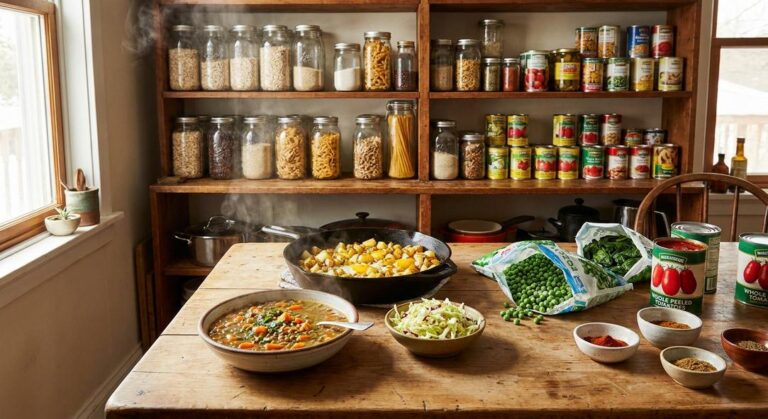
The cheapest healthy meals begin before cooking starts. A pantry stocked with the right basics turns “there is nothing to eat” into soup, tacos, fried rice, chili, pancakes, or pasta in under an hour. It also reduces the temptation to buy expensive convenience foods because everyone is hungry and the kitchen has begun to feel accusatory.
Here are the staples that deliver the most value for a family of four:
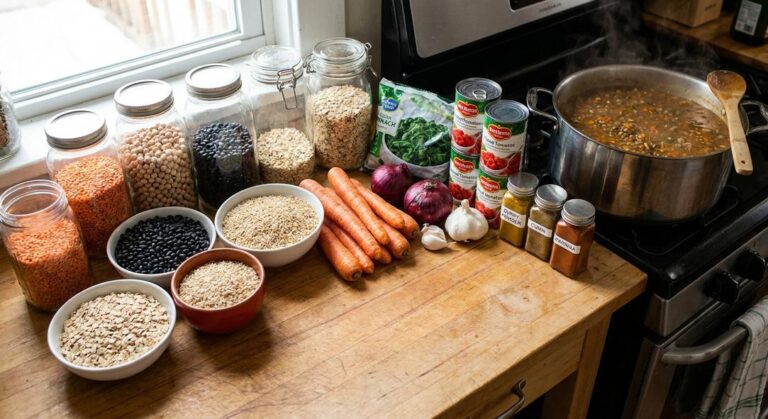
- Dry lentils and beans: usually cheaper than meat and packed with protein, iron, and fiber.
- Rice, oats, pasta, and potatoes: filling, versatile, and excellent carriers for vegetables and sauces.
- Eggs: still one of the most useful budget proteins, especially for breakfasts-for-dinner, frittatas, and fried rice.
- Canned tomatoes: the backbone of chili, soup, curry, pasta sauce, and shakshuka-style egg dishes.
- Frozen vegetables: peas, spinach, broccoli, corn, and mixed vegetables are economical and reduce waste.
- Cabbage, carrots, onions, and celery: inexpensive fresh vegetables that last longer than delicate greens.
- Peanut butter and yogurt: useful for breakfasts, sauces, snacks, and adding protein.
- Basic seasonings: salt, pepper, garlic powder, cumin, chili powder, Italian seasoning, curry powder, vinegar, and soy sauce can rescue almost anything.
The pantry is not glamorous, but glamour is overrated. A bag of lentils will never trend on a red carpet, yet it can become soup, dal, sloppy joes, tacos, or a pasta sauce. That is the kind of quiet competence one wants in a household budget.
Ten of the Cheapest Healthy Meals for a Family of Four 🍽️
These meals are not delicate little suggestions. They are sturdy, repeatable dinners, the sort that can survive substitutions, picky eaters, and the discovery that the cilantro has become compost in the crisper drawer. Approximate costs assume basic pantry seasonings are already on hand and may range from about $5 to $12 per meal depending on local prices.
1. Lentil soup with carrots, onions, and toast. Lentils cook quickly, require no soaking, and deliver a remarkable amount of protein and fiber for the price. Simmer lentils with onion, carrot, celery, garlic, canned tomatoes, and broth or water. Serve with toast or rice. It is cheap, hearty, and improves overnight like a person after a nap.
2. Bean and rice burrito bowls. Cook rice, warm black or pinto beans, add frozen corn, shredded cabbage or lettuce, salsa, and a little cheese or yogurt. This is one of the great budget meals because everyone can assemble their own bowl. Children enjoy control; parents enjoy not negotiating every bite.
3. Vegetable fried rice with eggs. Leftover rice is perfect here. Scramble a few eggs, add frozen peas and carrots, toss in rice, and season with soy sauce and a bit of oil. Add cabbage, onion, or any leftover cooked vegetable. It is fast, cheap, and tastes suspiciously like takeout if the pan is hot enough.
4. Pasta with tomato-lentil sauce. Red lentils melt into tomato sauce, adding protein and body without announcing themselves too loudly. Simmer canned tomatoes or passata with garlic, onion, Italian seasoning, and red lentils until soft. Serve over pasta with a sprinkle of cheese if the budget allows.
5. Baked potato bar. Potatoes are among the most underrated budget foods: filling, nutrient-rich, and wonderfully receptive to toppings. Bake large potatoes and set out beans, broccoli, plain yogurt, leftover chili, cheese, or sautéed vegetables. It feels festive, costs little, and uses leftovers elegantly.
6. Chickpea curry with rice. Canned or cooked chickpeas simmered with canned tomatoes, onion, curry powder, frozen spinach, and a splash of milk or coconut milk make a deeply satisfying meal. Serve with rice. It is warm, aromatic, and far cheaper than restaurant curry.
7. Egg and vegetable frittata. Whisk eggs with a little milk, add cooked potatoes, spinach, onion, peas, or leftover vegetables, then cook in a skillet or baking dish. Serve with toast or a simple cabbage slaw. Frittatas are how leftovers become respectable.
8. Turkey, bean, or lentil chili. Chili is budget cooking with a cape. Use beans as the foundation and add a small amount of ground meat if desired. Canned tomatoes, onion, chili powder, and frozen corn round it out. Serve over rice or with cornbread to stretch it further.
9. Peanut noodles with vegetables. Toss spaghetti or noodles with a sauce made from peanut butter, soy sauce, vinegar, garlic, and warm water. Add shredded carrots, cabbage, cucumber, or frozen edamame if affordable. It is filling, protein-rich, and pleasingly different from yet another red sauce dinner.
10. Oatmeal for dinner, but make it savory or celebratory. Oats are not only breakfast. Savory oats with eggs, sautéed greens, and a little cheese can be excellent. Or go sweet with peanut butter, banana, cinnamon, and yogurt. A breakfast-for-dinner night can be nutritionally sound and emotionally delightful. 🥣
The least expensive meal is the one your family will actually eat twice: once for dinner, and again as leftovers without theatrical sighing.
How to Use Meat Without Letting It Run the Budget 🐔
Meat is often the costliest item on the plate, but that does not mean it has to vanish. The trick is to stop treating meat as the whole headline. In budget kitchens around the world, meat is often used as a seasoning, accent, or supporting protein alongside beans, grains, and vegetables.
Chicken thighs, whole chickens, canned tuna, eggs, and sale-priced ground meat are usually better values than boneless skinless chicken breasts or prepared meats. A pound of ground turkey or beef can become chili for six servings if paired with beans and tomatoes. A roast chicken can be dinner one night, soup the next, and sandwiches after that. This is not stinginess; it is culinary common sense wearing an apron.
- Use half the meat in tacos and add beans, lentils, or sautéed mushrooms.
- Stretch chicken soup with rice, noodles, potatoes, or barley.
- Add a small amount of bacon, sausage, or ham to bean soups for flavor rather than volume.
- Buy family packs only if you can freeze portions immediately.
- Choose bone-in cuts when you have time; they are often cheaper and make better broth.
The goal is not to make dinner feel like a lecture on sacrifice. It is to create meals where meat contributes flavor while cheaper ingredients provide the bulk. Done well, nobody misses the old proportions.
Vegetables on a Budget: Fresh, Frozen, Canned, and Unapologetic 🥦
One of the more persistent myths in healthy eating is that fresh vegetables are morally superior. Fresh produce is wonderful, but only if it is eaten before it wilts into a costly puddle of intention. Frozen and canned vegetables deserve more respect. They are convenient, affordable, and often processed soon after harvest, which helps preserve nutrients.
For families watching costs, the best vegetable strategy is mixed. Buy hardy fresh produce for crunch and longevity, frozen vegetables for speed, and canned vegetables or tomatoes for backup. A freezer bag of spinach can disappear into soup, curry, eggs, pasta sauce, and smoothies. Cabbage can become slaw, stir-fry, taco topping, soup filler, or roasted wedges. Carrots, onions, and celery are the budget cook’s holy trinity for a reason.
It also helps to think of vegetables not as a side dish but as part of the meal’s structure. Shredded cabbage makes tacos more filling. Frozen peas turn pasta into something greener and sweeter. Carrots thicken lentil soup. Spinach gives curry a nutritional lift without demanding applause.
A Simple Weekly Plan That Keeps Costs Down 📋
The best budget meal plan is not a color-coded masterpiece requiring three apps and a spiritual awakening. It is a short list of dinners that share ingredients. Repetition is not failure; it is efficiency. The trick is to repeat ingredients without repeating the exact same meal every night.
Here is a realistic five-dinner plan for a family of four built around overlapping staples:
- Monday: Lentil soup with carrots and toast.
- Tuesday: Bean and rice burrito bowls with cabbage and salsa.
- Wednesday: Vegetable fried rice with eggs and frozen peas.
- Thursday: Baked potatoes topped with leftover lentil soup or beans.
- Friday: Pasta with tomato-lentil sauce and frozen spinach.
This plan uses lentils, rice, beans, eggs, potatoes, canned tomatoes, cabbage, carrots, and frozen vegetables in multiple ways. Nothing is exotic. Nothing requires a tiny jar of imported paste that costs more than a haircut. Most importantly, the plan leaves room for reality: sports practice, late meetings, surprise homework, and the evening when everyone simply wants toast.
If lunches are needed, cook extra rice, soup, or chili. Leftovers packed intentionally are cheaper and usually healthier than emergency lunches assembled from snacks. A container of bean-and-rice bowl leftovers may not change anyone’s life, but it can rescue a Wednesday.
Small Habits That Make Cheap Meals Healthier and Better 💡
Healthy budget cooking improves with a handful of habits. None are glamorous. All are useful. The first is to cook once and use twice. If you are making rice, make extra. If you are chopping onions, chop two. If you are simmering beans, freeze some. Future-you deserves allies.
The second habit is to season in layers. Cheap food tastes cheap when it is bland. Salt carefully, use acid at the end, and do not underestimate garlic, cumin, smoked paprika, chili powder, curry powder, vinegar, lemon juice, or a spoonful of mustard. A dull pot of beans can become dinner with the right seasoning; without it, it becomes a character-building exercise.
- Add acid: vinegar, lemon juice, salsa, or pickles brighten beans, soups, and bowls.
- Add texture: toasted breadcrumbs, cabbage, seeds, or chopped vegetables prevent mush fatigue.
- Add herbs when possible: parsley, cilantro, or green onions make inexpensive meals feel fresh.
- Use leftovers deliberately: yesterday’s chili becomes potato topping; rice becomes fried rice; roasted vegetables become frittata filling.
- Keep emergency meals: eggs, pasta, canned tomatoes, and frozen vegetables can save the budget from takeout.
The third habit is to reduce waste. Food thrown away is the most expensive food you buy. Before shopping, look in the refrigerator as if you are conducting a small investigation. What needs using first? What can become soup? What fruit is approaching the smoothie stage? A good budget cook is part chef, part detective, part compost-prevention officer.
So, What Is the Cheapest Healthy Family Meal? 🏆
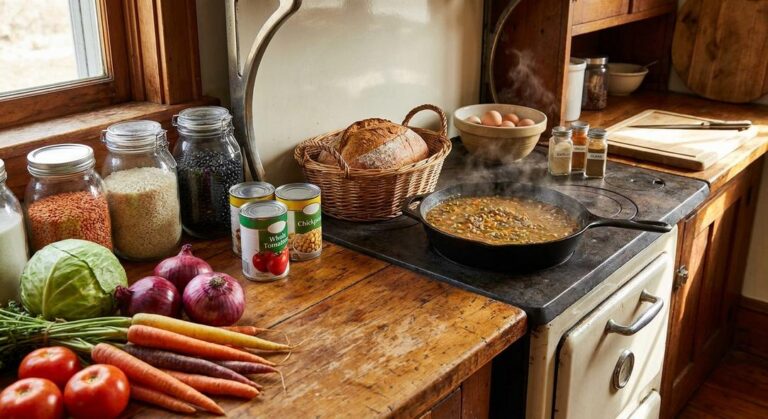
If forced to name one champion, I would nominate lentil soup with vegetables and rice or bread. It is hard to beat on cost, nutrition, and scalability. Lentils provide protein and fiber. Carrots, onions, and tomatoes add nutrients and flavor. Rice or bread makes it filling. It freezes well, reheats well, and can be seasoned in half a dozen directions.
But the broader answer is more useful: the cheapest healthy meals are not single recipes but formulas. Beans plus grain plus vegetables. Eggs plus vegetables plus potatoes. Pasta plus legumes plus tomato sauce. Soup plus bread. Rice plus leftovers plus eggs. Once you learn the patterns, you can shop sales, use what you have, and cook without treating every dinner like an exam.
Family meals do not need to be perfect to be healthy. They need to be steady. A pot of chili, a tray of baked potatoes, a pan of fried rice, a bowl of oats with peanut butter and bananas: these are not glamorous meals, but they are deeply competent ones. They feed people, protect the budget, and leave enough money for the other expensive business of family life, such as shoes that fit for approximately eleven minutes.
Cheap healthy cooking is not about pretending lentils are steak or that cabbage is a luxury spa experience. It is about respecting simple ingredients enough to cook them well. With a few staples, a little planning, and a willingness to let leftovers have a second act, a family of four can eat nourishing meals without turning the grocery bill into a monthly horror story. 🍽️
FAQ
What is the absolute cheapest healthy dinner for a family of four?
Lentil soup, bean-and-rice bowls, and vegetable fried rice are usually among the cheapest. Lentil soup may be the strongest all-around choice because it offers protein, fiber, vegetables, and leftovers for a very low cost.
Are canned and frozen vegetables as healthy as fresh?
Yes, they can be very healthy. Frozen vegetables are often picked and frozen at peak ripeness, while canned vegetables and tomatoes are affordable and convenient. Choose low-sodium options when possible, or rinse canned vegetables and beans to reduce sodium.
How can I feed picky eaters on a tight budget?
Use flexible meals where each person can customize their plate, such as baked potato bars, burrito bowls, tacos, pasta, and rice bowls. Keep the base simple, then offer toppings or sauces separately. This reduces conflict without requiring separate meals.
Is it cheaper to cook vegetarian meals?
Often, yes. Meals based on beans, lentils, eggs, rice, oats, pasta, and potatoes are usually less expensive than meat-centered meals. You do not have to become fully vegetarian; even replacing a few meat-heavy dinners each week can lower costs significantly.
How do I make cheap meals taste better?
Season generously but thoughtfully. Use garlic, onions, spices, herbs, vinegar, lemon juice, salsa, soy sauce, or a small amount of cheese or yogurt. Texture also matters: add cabbage, toasted breadcrumbs, seeds, or fresh toppings to keep meals lively.