⚡ Key Takeaways
- ✅ Cooling your home efficiently starts with controlling heat before it gets inside.
- ✅ A slightly higher thermostat setting, paired with fans, can cut costs without turning your living room into a sauna.
- ✅ Air leaks, dirty filters, and neglected vents quietly sabotage your air conditioner.
- ✅ Big appliances should be used strategically, especially during peak-rate hours.
- ✅ Small habits—closing blinds, cooking differently, unplugging idle electronics—compound into real savings.
- ✅ Smart thermostats and utility programs can help, but only if used thoughtfully.
- ✅ The goal is not heroic discomfort; it is a cooler home with less waste and a smaller bill.
There is a particular kind of disbelief that arrives with a summer electric bill. You open it casually, perhaps while drinking iced coffee, and then suddenly you are conducting a private congressional hearing at the kitchen table. Who used this much power? Was it the air conditioner, the refrigerator, the children, the mysterious blinking devices in every room—or some combination of all known modern conveniences conspiring against you?
The summer bill feels personal because comfort in hot weather is not a luxury in the way scented candles are a luxury. It is physical. It is sleep. It is sanity. Telling people to “just turn off the AC” during a heat wave is less energy advice than character assassination. Yet the truth is equally stubborn: air conditioning is one of the biggest electricity users in most homes during summer, and many households are paying to cool not only themselves, but also attics, leaky ducts, sun-baked windows, empty rooms, and occasionally the entire neighborhood through gaps around doors.
The good news is that lowering your electric bill does not require adopting the lifestyle of a desert monk. It requires a better strategy. Summer energy savings are rarely about one dramatic sacrifice. They come from a series of small, almost boring interventions that add up: shade before sunshine becomes heat, airflow before colder air, maintenance before mechanical panic, timing before expensive peak demand. 🌞
The cheapest electricity is the electricity you never ask your home to use in the first place.
Start by Keeping Heat Out, Not Fighting It Later 🏡
Air conditioning is often treated like a rescue service: we let the house heat up all day, then expect the system to perform a miracle at 5 p.m. A smarter approach is prevention. Heat gain is the enemy, and much of it arrives through windows, roofs, walls, and tiny leaks that seem harmless until the sun has spent six hours pressing against the glass like an unpaid intern with ambition.
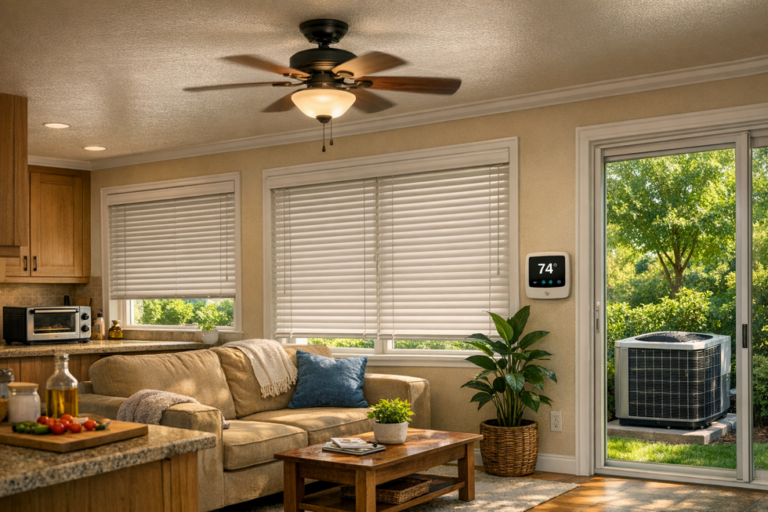
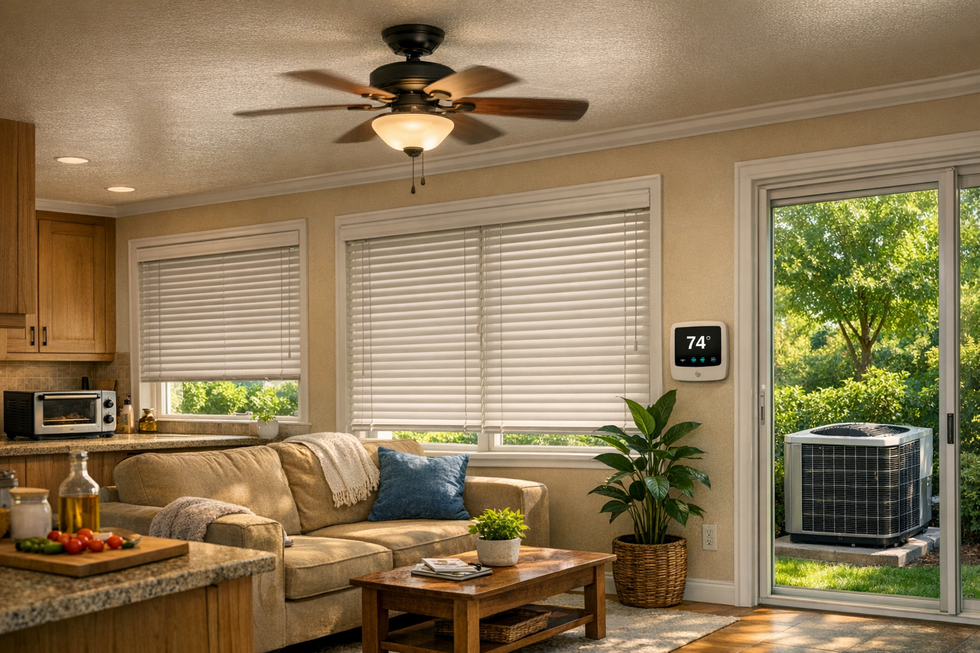
Windows are especially important. Sunlight streaming through glass may look cheerful, but it behaves like a tiny furnace. South- and west-facing windows are usually the worst offenders in the afternoon, when temperatures are already high and your cooling system is working hardest.
- Close blinds, curtains, or shades during the hottest part of the day, especially on sun-facing windows.
- Use light-colored window coverings where possible; they reflect more heat than dark fabrics.
- Consider thermal curtains or cellular shades in rooms that overheat.
- Add exterior shade if you can: awnings, shade sails, shutters, trees, or even well-placed patio umbrellas.
- Apply removable solar window film if you rent or want a low-commitment option.
Exterior shade deserves special praise because it stops heat before it reaches the glass. Interior curtains help, certainly, but by the time sunlight is inside the room, some heat has already entered the building. A tree, awning, or exterior shade is like a bouncer at the door. The heat may have dressed nicely, but it is not getting in.
Don’t overlook doors and gaps. A thin line of daylight around an exterior door is not charming; it is a paid invitation for hot air. Weatherstripping and door sweeps are inexpensive and often easy to install. Caulk around windows, inspect attic hatches, and seal gaps around plumbing or cable penetrations. The aim is not to hermetically seal your home like a submarine, but to stop obvious leaks that force your air conditioner to cool a moving target.
Use the Thermostat Like a Negotiator, Not a Panic Button ❄️
The thermostat is where many summer energy dramas begin. Someone comes home hot, jabs the temperature down to 65 degrees, and assumes the air conditioner will cool faster. It will not. Most central AC systems cool at one speed. Setting the thermostat extremely low usually just makes the system run longer, like telling a taxi driver to arrive sooner by naming a destination three towns away.
A more effective strategy is to choose a comfortable but sensible setting and let the system maintain it steadily. For many households, around 76 to 78 degrees Fahrenheit is a reasonable summer target when people are home. Some can go higher with ceiling fans and good shading; others, especially households with infants, older adults, health conditions, or poor insulation, may need lower settings. Comfort is not a moral contest.
The key is the gap between indoor and outdoor temperatures. The bigger the difference, the harder your air conditioner works. Moving the thermostat up even a couple of degrees can produce noticeable savings over the course of a hot month.
- Set the thermostat a few degrees higher when you are away for several hours.
- Avoid turning the AC completely off in extreme heat if your home becomes dangerously hot or humid.
- Use a programmable or smart thermostat to create a schedule you do not have to remember.
- Keep lamps, televisions, and heat-producing electronics away from the thermostat so they do not trick it into overcooling.
- Do not block the thermostat with furniture, curtains, or direct sunlight.
Smart thermostats can be useful, but they are not magic amulets. Their value lies in scheduling, learning patterns, and avoiding waste. If you override them constantly, they become expensive wall decorations with Wi-Fi. Set realistic temperatures, use away modes, and review energy reports if the device provides them. The data can reveal patterns you would otherwise miss, such as cooling an empty house every weekday afternoon.
A thermostat is not a throttle. Lowering it dramatically does not cool your home faster; it usually just cools your wallet faster.
Make Fans Do the Cheap Work 🌬️
Fans do not lower the temperature of a room. This is the first thing to understand, and it is where many people accidentally waste electricity. A fan cools people by moving air across skin, helping sweat evaporate. If no one is in the room, the fan is not “cooling the room.” It is auditioning for a role in a very boring play.
Used properly, however, fans are among the best tools for lowering summer electricity use without discomfort. A ceiling fan can make a room feel several degrees cooler, allowing you to set the thermostat higher while maintaining comfort. That difference can be meaningful because air conditioners use far more power than fans.
- Run ceiling fans counterclockwise in summer so they push air downward.
- Turn fans off when leaving the room.
- Use portable fans to target occupied areas rather than cooling the whole house more aggressively.
- Create cross-breezes in the early morning or late evening if outdoor air is cooler and humidity is manageable.
- Use bathroom and kitchen exhaust fans briefly, but do not leave them running longer than necessary because they can pull cooled air out of the house.
At night, fans can be especially powerful. A bedroom ceiling fan or quiet oscillating fan may let you raise the thermostat slightly and still sleep comfortably. And sleep matters. Any energy-saving plan that ruins sleep is not a plan; it is a slow-motion domestic crisis.
There is one caveat: in very humid climates, moving air helps people feel cooler, but ventilation from outside may bring in moisture that makes the AC work harder later. If your summer air feels like soup, be selective about opening windows. The goal is to invite in cool air, not a damp sponge.
Give Your Air Conditioner a Fighting Chance 🛠️
An air conditioner is a machine, not a miracle. If it is dirty, blocked, underserviced, or trying to push air through a clogged filter, it will consume more electricity while delivering less comfort. This is the sort of inefficiency that feels invisible until the bill arrives with the subtlety of a marching band.
The humble air filter is the easiest place to start. A clogged filter restricts airflow, making the system work harder and potentially causing components to freeze or fail. During heavy summer use, check the filter monthly. Some homes can replace it every one to three months, but households with pets, dust, wildfire smoke, or constant AC use may need more frequent changes.
- Replace or clean air filters regularly according to your system’s needs.
- Keep supply and return vents unblocked by rugs, furniture, curtains, or laundry piles with delusions of permanence.
- Clear leaves, weeds, and debris from around the outdoor condenser unit.
- Give the outdoor unit at least a couple of feet of breathing room when possible.
- Schedule professional maintenance if the system has not been serviced recently.
- Inspect accessible ductwork for obvious leaks, disconnected sections, or damaged insulation.
Duct leakage can be a major source of waste, especially when ducts run through attics, crawl spaces, or garages. If cooled air escapes before reaching living spaces, you pay for comfort that never arrives. Sealing ducts with proper mastic or approved foil tape—not the cloth “duct tape” that history has cruelly misnamed—can improve performance. For larger problems, a professional assessment may be worthwhile.
If your AC is old, struggling, or constantly running, replacement may eventually make financial sense. But before leaping to a new system, fix the basics: insulation, leaks, shading, filters, ducts, and thermostat habits. A high-efficiency air conditioner installed in a leaky, sun-blasted house is a bit like buying premium ice cream and storing it on the porch.
Shift Electricity Use Away from Peak Hours ⏰
Not all electricity costs the same. Many utilities now use time-of-use rates, charging more during peak demand periods—often late afternoon and early evening in summer, when homes are hot, people return from work, and air conditioners across the region roar to life like synchronized lawn equipment.
If your utility uses peak pricing, timing becomes a form of thrift. Even if you are on a flat rate, shifting heat-producing activities away from the hottest part of the day can reduce strain on your cooling system.
- Run dishwashers late in the evening or early in the morning.
- Do laundry outside peak hours, especially if you use an electric dryer.
- Pre-cool the home slightly before peak hours if your rate plan rewards it, then raise the thermostat during the expensive window.
- Avoid using the oven on very hot afternoons.
- Charge electric vehicles during off-peak hours if your utility plan encourages it.
Dryers are particularly important. An electric dryer is both an energy user and a heat producer. It consumes power, then releases warmth into the home, which your air conditioner may have to remove. If you can air-dry some laundry, use a drying rack, or run the dryer after sunset, the savings are modest but real. Summer is one of the few seasons when a towel on a rack feels less like inconvenience and more like common sense.
Dishwashers also produce heat and humidity. Many modern machines are efficient, especially when fully loaded, but the heated dry cycle is often unnecessary. Open the door after the wash cycle and let dishes air-dry if your kitchen can tolerate the humidity. Your plates will survive the indignity.
Cook Without Turning the Kitchen into a Weather Event 🍽️
In winter, a hot oven feels cozy. In July, it feels like betrayal. Cooking choices matter because every bit of heat released indoors must either be endured or removed by the AC. The kitchen is often where energy efficiency and dinner collide, and dinner usually wins. But it does not have to win expensively.
Summer cooking rewards smaller appliances. Microwaves, toaster ovens, pressure cookers, slow cookers, rice cookers, induction burners, and air fryers generally use less energy than a full-size oven and dump less heat into the room. Outdoor grilling can help too, though no one should be shamed into standing over flames during a heat advisory for the sake of a lower bill.
- Batch-cook in the morning or evening when the house is cooler.
- Use lids on pots to reduce cooking time and heat release.
- Choose no-cook meals occasionally: salads, sandwiches, chilled noodles, fruit, yogurt, or rotisserie chicken.
- Use exhaust fans while cooking, but turn them off once steam and odors are gone.
- Keep refrigerator and freezer doors closed as much as possible while cooking.
The refrigerator is another quiet player in the summer bill. It works harder in a hot kitchen, harder still if its coils are dusty, and harder yet if people keep opening the door to stare inside as though inspiration lives behind the mustard. Clean coils if accessible, check door seals, and keep the fridge reasonably full but not packed so tightly that air cannot circulate.
In summer, every indoor appliance has two costs: the electricity it uses and the heat your air conditioner must later remove.
Hunt Down the Small Loads That Never Sleep 🔌
Air conditioning may be the summer headliner, but the supporting cast matters. Many devices use electricity even when they appear to be off. Televisions, game consoles, cable boxes, chargers, smart speakers, desktop computers, printers, and coffee makers with glowing clocks all contribute to what is often called standby power or phantom load.
Individually, these loads may be small. Together, over weeks and months, they become the electrical equivalent of loose change leaking from a pocket. You do not need to unplug your entire life every night, but you should identify clusters of devices that can be controlled easily.
- Use advanced power strips for entertainment centers and home offices.
- Unplug chargers when they are not in use.
- Put computers into sleep mode or shut them down when idle for long periods.
- Turn off game consoles instead of leaving them in standby.
- Replace incandescent bulbs with LEDs, which use less electricity and produce less heat.
Lighting is an underrated summer issue. Old incandescent bulbs are little heaters that happen to glow. LEDs use far less power and release much less heat. If you still have incandescent bulbs in lamps used often, replacing them is among the least dramatic and most sensible upgrades available. Nobody writes heroic poems about changing light bulbs, but perhaps they should.
Smart plugs can help monitor and schedule devices, but do not let the gadget solution become more complicated than the problem. The best energy-saving device is often the simplest: an accessible switch that actually gets used.
Mind the Humidity, Because Comfort Is Not Just Temperature 💧
One of the great summer misunderstandings is that temperature alone determines comfort. Humidity matters enormously. A room at 76 degrees with moderate humidity can feel pleasant; the same room with swamp-like humidity can feel like being wrapped in a warm towel by someone with poor boundaries.
Air conditioners remove some humidity as they cool, but oversized systems may cool too quickly without running long enough to dehumidify properly. Meanwhile, everyday habits can add moisture indoors: long showers, boiling water, drying clothes inside, and poor ventilation.
- Use bathroom fans during showers and for a short time afterward.
- Fix plumbing leaks promptly.
- Cover pots when cooking to reduce steam.
- Avoid excessive indoor air-drying in already humid conditions.
- Consider a dehumidifier in damp areas, but remember it uses electricity and releases some heat.
A dehumidifier can improve comfort in basements or muggy rooms, sometimes allowing a higher thermostat setting. But it is not free cooling. It consumes electricity and adds heat, so use it strategically. If the whole house is humid, the better fix may involve AC maintenance, air sealing, ventilation improvements, or professional evaluation.
Humidity also affects sleep. Lightweight bedding, breathable fabrics, and a fan can reduce the temptation to drive the thermostat lower at night. The goal is not austerity; it is comfort achieved by more than one machine.
Know When Bigger Investments Are Worth It 🏠
Some summer savings are cheap: closing blinds, changing filters, using fans properly. Others require spending money before saving it. The question is not whether every upgrade is “worth it” in the abstract, but whether it fits your home, climate, budget, and how long you plan to stay.
Insulation is often associated with winter, but it matters in summer too. A poorly insulated attic can become an overhead radiator, sending heat downward all day. Adding attic insulation or improving attic ventilation may reduce cooling demand, especially in older homes.
Windows are more complicated. Replacing windows can be expensive, and the payback varies widely. Before assuming new windows are the answer, consider lower-cost measures: sealing gaps, adding shades, using solar film, and improving exterior shading. If windows are damaged, single-pane, or severely leaky, replacement may make sense—but it should be part of a broader plan, not a reflex.
- Ask your utility whether it offers rebates for insulation, smart thermostats, heat pumps, HVAC tune-ups, or efficient appliances.
- Request a home energy audit if available; some utilities subsidize them.
- Compare payback periods, but also consider comfort, noise, humidity control, and reliability.
- Check whether tax credits or local incentives apply to efficiency upgrades.
- Prioritize fixes that reduce cooling load before buying larger cooling equipment.
Heat pumps deserve mention. Modern heat pumps can cool efficiently in summer and heat efficiently in winter, depending on climate and system design. If your old AC is nearing retirement, it may be worth discussing high-efficiency heat pump options with a qualified contractor. The right system can reduce energy use, but sizing and installation quality matter. A poorly installed efficient system is still a poorly installed system, just with a nicer brochure.
Build a Summer Savings Routine That You Will Actually Follow ✅
The best energy plan is not the most virtuous one. It is the one you can repeat without turning your household into a compliance department. People do not fail because they lack access to tips; they fail because the tips are either too fussy, too joyless, or require remembering twelve things before breakfast.
Create a simple routine. Think of it as seasonal muscle memory rather than a moral obligation. In the morning, close blinds on sunny windows. Before leaving, raise the thermostat a few degrees. In the evening, run heat-producing appliances after peak hours. Once a month, check the AC filter. That alone puts you ahead of many households.
- Choose a realistic thermostat setting for home, away, and sleep.
- Identify the hottest windows and block afternoon sun.
- Check the air filter and set a monthly reminder.
- Move laundry, dishwashing, and EV charging away from peak hours if your rate plan rewards it.
- Replace frequently used incandescent bulbs with LEDs.
- Use fans only in occupied rooms.
- Review your utility bill for rate details, usage trends, and rebate programs.
It is also worth reading your electric bill more closely than anyone really wants to. Look for kilowatt-hour usage, rate structure, peak pricing, delivery charges, and comparisons to previous months or last year. Bills are rarely charming literature, but they do contain clues. If usage has jumped dramatically without a change in weather or household habits, something may be wrong: a failing appliance, a malfunctioning AC system, a pool pump schedule gone rogue, or a teenager mining cryptocurrency in the basement. Stranger things have happened.
The point is not to use no electricity. The point is to stop paying for discomfort, waste, and habits you would change if only they were visible.
A Cooler Bill Without a Miserable Summer 🌿
Lowering your electric bill in summer is not about proving you can suffer elegantly. It is about understanding where the heat comes from, how your home responds to it, and which habits ask your cooling system to do unnecessary work. The most effective changes are often mundane: shade the windows, seal the leaks, change the filter, use fans correctly, cook wisely, shift appliance use, and stop cooling empty rooms as if ghosts demand climate control.
Comfort and conservation are too often framed as enemies. In reality, they can be allies. A shaded room is more comfortable. A well-maintained AC system cools better. A fan in the right place feels good. A house with less humidity is easier to live in. Efficiency is not deprivation wearing a cardigan; it is the removal of waste.
So yes, open the bill. Give it a hard look. Then give your home one too. Somewhere between the blazing window, the clogged filter, the oven at 4 p.m., and the fan spinning dutifully in an empty guest room, there is money to be saved—and you do not have to sweat through dinner to find it. ⚡
FAQ
What is the best thermostat setting to save money in summer?
Many households find that 76 to 78 degrees Fahrenheit is a good balance when people are home, especially when paired with fans. Raising the thermostat a few degrees when you are away can save more. The best setting depends on your climate, insulation, health needs, and comfort level.
Do ceiling fans actually lower my electric bill?
Yes, if you use them correctly. Fans cool people, not rooms, so turn them off when no one is present. A fan can make you feel comfortable at a higher thermostat setting, which reduces air conditioning use and can lower your bill.
Should I turn my air conditioner off when I leave home?
For short absences, it is usually better to raise the thermostat rather than turn the system off completely, especially in very hot or humid climates. Turning it off may allow the home to become extremely hot, forcing the AC to work hard later and potentially creating humidity problems.
Which appliances cost the most to run in summer?
Air conditioning is typically the largest summer electricity user. Electric dryers, ovens, pool pumps, dehumidifiers, and older refrigerators can also contribute significantly. If you have time-of-use rates, running major appliances during peak hours can make them even more expensive.
Are smart thermostats worth it?
They can be worth it if you use scheduling, away modes, and energy reports. A smart thermostat will not save much if it is constantly overridden or programmed poorly. Check for utility rebates, as many companies offer discounts that reduce the upfront cost.
About the Author